


Skill matrix explained simply: definition, advantages and automation in shift planning
In this article, we give you a comprehensive overview: from the definition and practical application to optimization through automation.
A skills matrix is an indispensable tool for companies to efficiently manage and clearly display employee skills. From shift planning and the identification of skills gaps to compliance with legal requirements - these matrices create transparency and make personnel management easier. But how does a skills matrix work? What advantages does it offer and how can modern software revolutionize the maintenance and automation of qualification matrices?

What is a skills matrix?
A qualification matrix (also known as a skills matrix) is derived from the qualifications of employees and the required areas of work in a company.
This data must be analyzed, reviewed and possibly expanded at regular intervals. Traditionally, many companies map their skills matrices in spreadsheet programs such as Excel.
Differentiation from skill matrix and competence matrix
Skills matrix vs competency matrix:
The skills matrix is often used in HR departments. Even though the term is often used synonymously with skills matrix, the two terms mean different things. In contrast to the skills matrix, the skills matrix looks at individual people or teams and takes into account factors such as methodological skills and social skills in addition to specialist skills.
The focus is often on interdisciplinary, company- or project-specific skills that are closely linked to the company structure. It is used to assess the competence level of teams or departments and to plan long-term development strategies.
Qualification matrix vs skill matrix
Skill matrix and qualification matrix mean the same thing. Both terms describe matrices that systematically record the qualifications of employees. They are particularly important in production environments in order to identify qualification gaps and training needs. In short: the qualification matrix (or skills matrix) manages certificates and formal qualifications, while the skills matrix is more behavior-oriented and often includes interdisciplinary skills.
Areas of application and advantages of a qualification or skills matrix
A qualification overview for employees, as presented in a qualification matrix, is an important tool for ensuring that the right resources and skills are available in a company at all times. It provides a structured overview of employees' existing qualifications and enables them to be systematically matched with the requirements of a position or process.
Smart Qualification Management with shyftskills
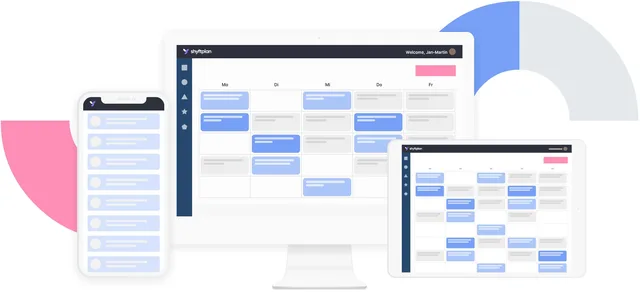
Outdated tools like Excel make efficient workforce planning difficult and increase the risk of errors and audit issues. shyftskills streamlines qualification management: standardized, audit-compliant, and in real time.
By combining qualification matrices with shift scheduling on a single platform, shyftskills ensures that only properly qualified staff are scheduled. You can identify skill gaps early, manage certifications automatically, and stay audit-ready at all times – across departments and locations, fully integrated.