Integrated shift planning for SAP SuccessFactors. Automated and industry-proven.

Efficient Shift Scheduling Despite the Skills Shortage: Qualification-Based Workforce Scheduling
Reducing administrative burdens and safeguarding compliance in manufacturing
When production capacities remain unutilised due to a lack of skilled workers, delivery deadlines and profitability come under pressure. In the industrial sector, the skills shortage is no longer merely an HR issue; it is an operational risk that affects the entire value chain. To compensate for absences and optimally deploy the remaining workforce, highly dynamic and responsive rescheduling is absolutely essential. Static planning tools reach their limits here.
This technological shift is therefore the necessary consequence to maintain operational control over processes and permanently guarantee the delivery capabilities of the sites. In this article, you will learn how to sustainably safeguard your machine availability through intelligent qualification management and automated scheduling processes.

The Impact of Staff Shortages on Manufacturing
The skills shortage in industry does not merely manifest itself in unfilled vacancies; it leads to decreasing flexibility during short-notice staff absences and a critical loss of expertise. When experienced knowledge bearers are temporarily absent due to holidays or illness, or retire due to age, critical specialist knowledge is missing on the shop floor. Since personnel planning in such phases often has to be calculated without time buffers, these professional and personnel gaps have a direct impact on manufacturing processes.
- Production standstill due to incorrect staffing: In highly division-of-labour processes, the absence of a specialised expert in a key position can block the entire line. Such unplanned downtimes increase unit costs and jeopardise delivery deadlines.
- Risk of knowledge loss: If experiential knowledge about necessary staffing combinations is only available informally, the susceptibility to errors increases with staff turnover or age-related departures. A digital safeguard of this qualification data is essential for process stability.
- Rising cost pressure: To close personnel gaps at short notice, companies often have to resort to expensive temporary agency work or overtime. With a continuous overtime burden, the error rate rises due to fatigue and lack of concentration among the core workforce. If reliance is instead placed increasingly on agency workers, they often lack specific machine knowledge and operational routine, which also leads to a measurable decline in manufacturing quality.
A strategic workforce scheduling system acts as a control instrument here, identifying risks early and safeguarding production even with scarce resources.
Qualification Management as the Basis for Operational Flexibility
In the event of staff shortages, precise knowledge of the workforce's skills is a fundamental prerequisite. A digital qualification management system integrates the qualification matrix directly into the planning process for this purpose.
- Automated matching of requirements: With every assignment, the system checks whether the employees possess the necessary certifications, safety inductions, and professional qualifications. This ensures that machines are only operated by authorised personnel.
- Efficient cover management: In the event of sick leave, the software immediately identifies all available employees with the appropriate qualification profile. Gaps can thus be closed within a very short time without interrupting operational procedures.
- Identification of training needs: The systematic analysis of staffing gaps highlights areas where shortages are imminent. This enables targeted training of employees for critical task areas.
Systematic Reduction of Overload and Unplanned Absences
A permanent lack of staff frequently leads to the overloading of the remaining workforce. To ensure the long-term operational readiness of employees, planning must actively consider workload limits.
- Transparent workload distribution: Through objective planning algorithms, night or weekend work is distributed fairly. This increases the acceptance of the rota and protects staff from physical and psychological overstrain.
- Adherence to legal foundations: The software monitors the requirements of working time regulations as well as collective and company agreements. Violations of maximum working hours or rest periods are prevented during the planning stage.
- Management of working time accounts: Transparent accounts enable production management to proactively balance overtime. This systematically reduces the accumulation of uncontrolled overtime and actively protects the internal workforce from chronic overload.
- Economical management of temporary work: While external specialists compensate for personnel bottlenecks, they represent a significant cost driver. Systematic scheduling therefore consistently prioritises core staff when filling shifts. If purchasing agency work is unavoidable, assignment is strictly qualification-based to prevent expensive inefficiencies caused by unsuitable external personnel.
Process Automation: System-Supported Relief for the Administrative Level
The skills shortage increases the administrative burden in shift scheduling, as short-notice staff absences require frequent rescheduling under severe time pressure. Automating these workflows through shyftplan lowers the manual error rate and ensures adherence to company guidelines.
- Rule-based staffing suggestions: The system uses stored planning algorithms to identify qualified employees for staffing gaps. In doing so, the rota software matches the required qualifications, contractual availability, and legal rest periods in real time. This ensures that staffing decisions are always based on valid data.
- System integration (ERP/SAP): shyftplan can be integrated into existing IT infrastructures via interfaces. Through bidirectional data exchange with systems like SAP, HR master data and time management are kept consistent. Manual double entries are eliminated, increasing data integrity across the entire planning process.
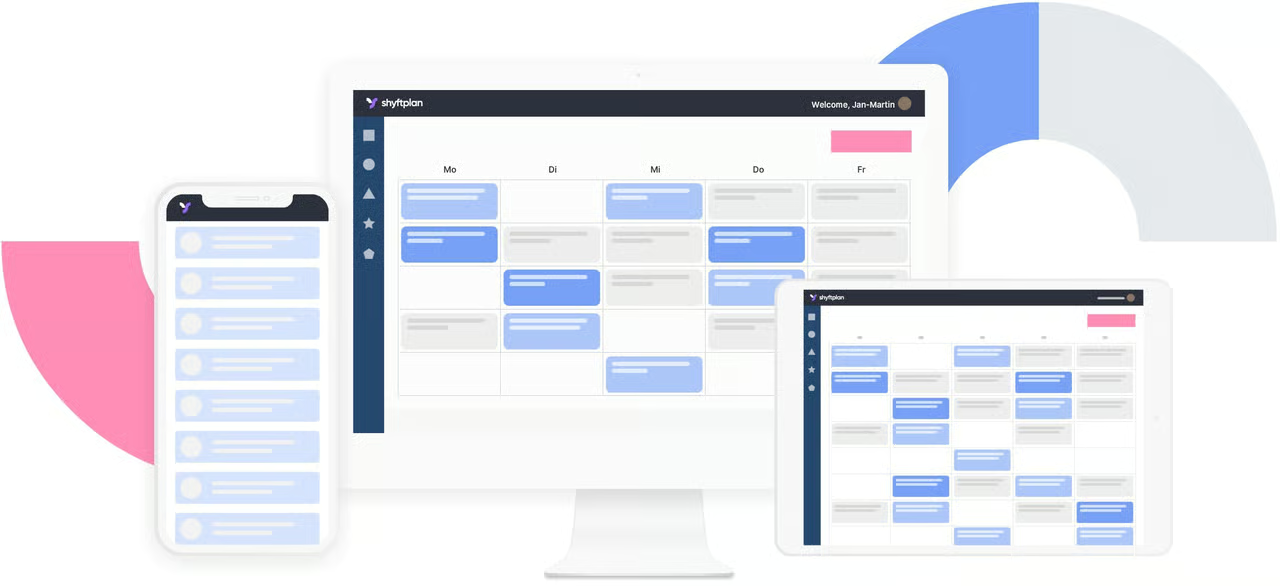
- Digital communication and return channel: Open shifts are communicated directly to authorised employees via the mobile application. Feedback is processed by the system and immediately adopted into the rota. This digital process replaces informal communication channels and seamlessly documents the staffing process.
- Legal certainty and system checking: With every planning change, the software conducts an automated check against working time regulations as well as collective and company agreements. Violations are recognised and prevented while still in the draft stage.
Profitability and Process Stability
Investing in fully integrated workforce scheduling is a necessary response to the changing framework conditions in the labour market. Companies that methodically manage their human resources increase their process stability against unforeseeable events and secure their operational performance.
shyftplan supports companies in bridging the gap between technical necessity and personnel availability. By uniting qualifications, legal requirements, and user needs within an integrated system, we bring order to the complexity of industrial workforce scheduling.
We would be happy to assist you in reviewing the technical and procedural suitability for your company.
What concrete impact does the skills shortage have on manufacturing processes?
The skills shortage leads to a critical loss of expertise and decreasing flexibility during short-notice staff absences. If specialised personnel are missing from key positions, this can block entire production lines, driving up unit costs and jeopardising delivery deadlines. To close these gaps, companies often have to resort to expensive temporary work or overtime, which in turn increases cost pressure and causes the error rate to rise due to fatigue among the core workforce.

How does digital qualification management help to overcome personnel bottlenecks?
A digital system integrates the qualification matrix directly into the planning process. With every shift assignment, it automatically checks whether employees possess the strictly required certifications, safety inductions, and professional expertise. If a worker drops out at short notice, the software immediately identifies all available employees with the exact matching profile, allowing the gap to be closed in the shortest possible time and without interrupting operations.
How does automated workforce scheduling relieve shift management while simultaneously protecting the workforce?
The software uses rule-based algorithms to suggest qualified and legally permissible employees for staffing gaps in real time. In the background, the system continuously monitors the requirements of working time regulations and collective agreements, blocking violations while still in the draft stage. In addition to massively relieving the administrative burden on shift management, the objective and fair distribution of workloads (e.g., night shifts) actively protects the workforce from psychological and physical overload.