Integrated shift planning for SAP SuccessFactors. Automated and industry-proven.

Structured Workforce Scheduling for Works Fire Brigades

Scheduling a works fire brigade requires strict adherence to statutory and operational regulations. Co-ordinating watches in a 24-hour operation, coupled with strict rest periods and the requirement to prove constant operational readiness, generates a high administrative overhead. shyftplan systematises these processes. The software translates the complex requirements of fire protection into a digital scheduling environment. This supports the compliant staffing of the station and significantly reduces the scheduling workload for management.
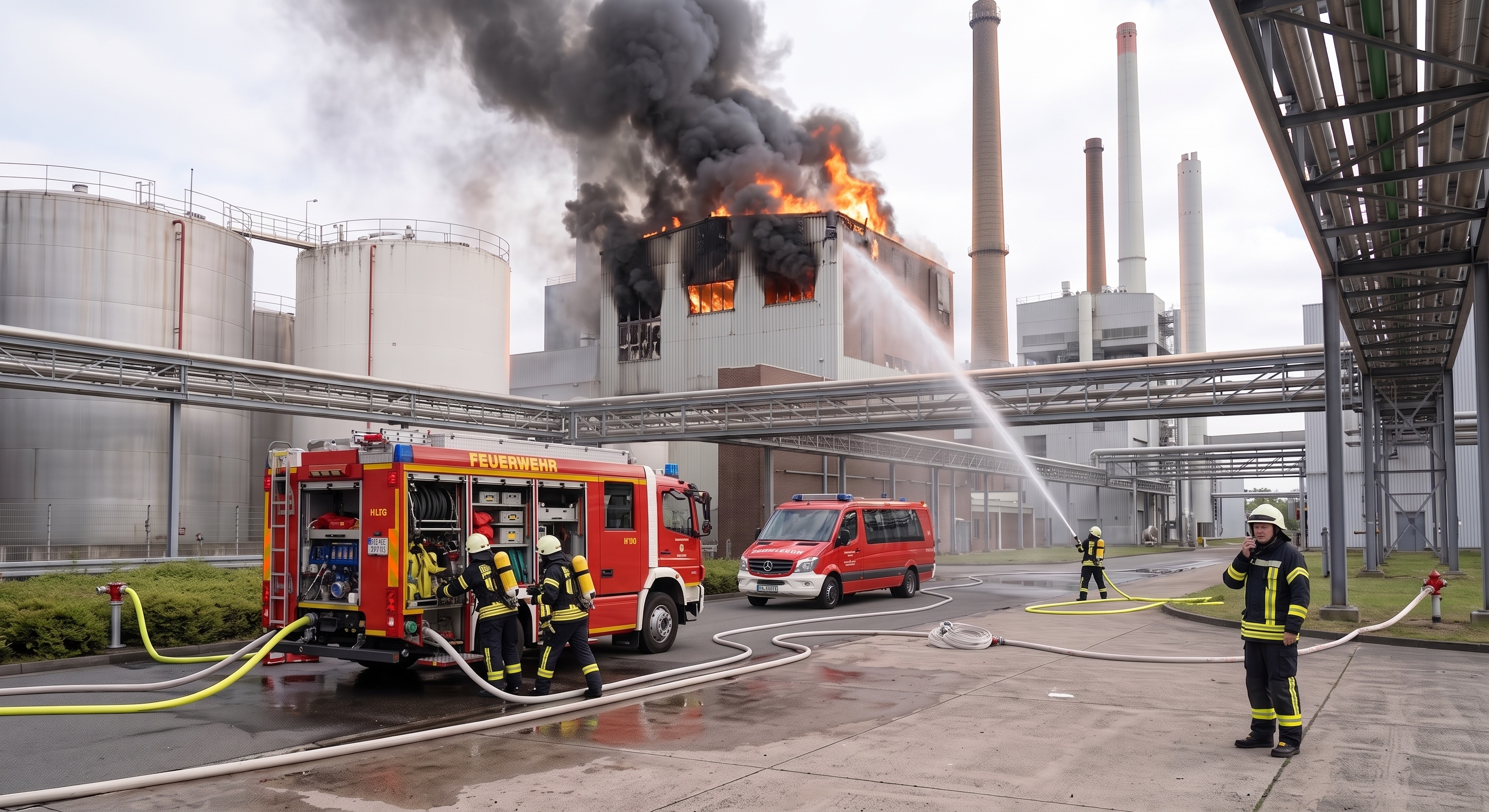
Maintaining Baseline Staffing and Operational Strength
In emergency response, maintaining the legally required baseline cover and specific role-based staffing is crucial. shyftplan continuously checks qualification requirements and matches them against staff availability to seamlessly document the operational capability of the watches.
Operational Impact with shyftplan
Ensuring Baseline Staffing
Occupational Health Fitness
Complex Shift Patterns
Qualification Management
Hybrid Integrations

Process Security through System Integration and Data Foundations
Structured data capture forms the basis for internal audits and payroll. Integrating shyftplan into existing system landscapes creates a reliable framework for this:
- Precise data for payroll: The exact logging of shifts, deployments, and alarm hours facilitates the calculation of fire service allowances and hazard pay.
- Management of specialist qualifications: Differentiated qualification profiles for various deployment scenarios (fire protection, technical rescue) can be centrally managed and tracked.
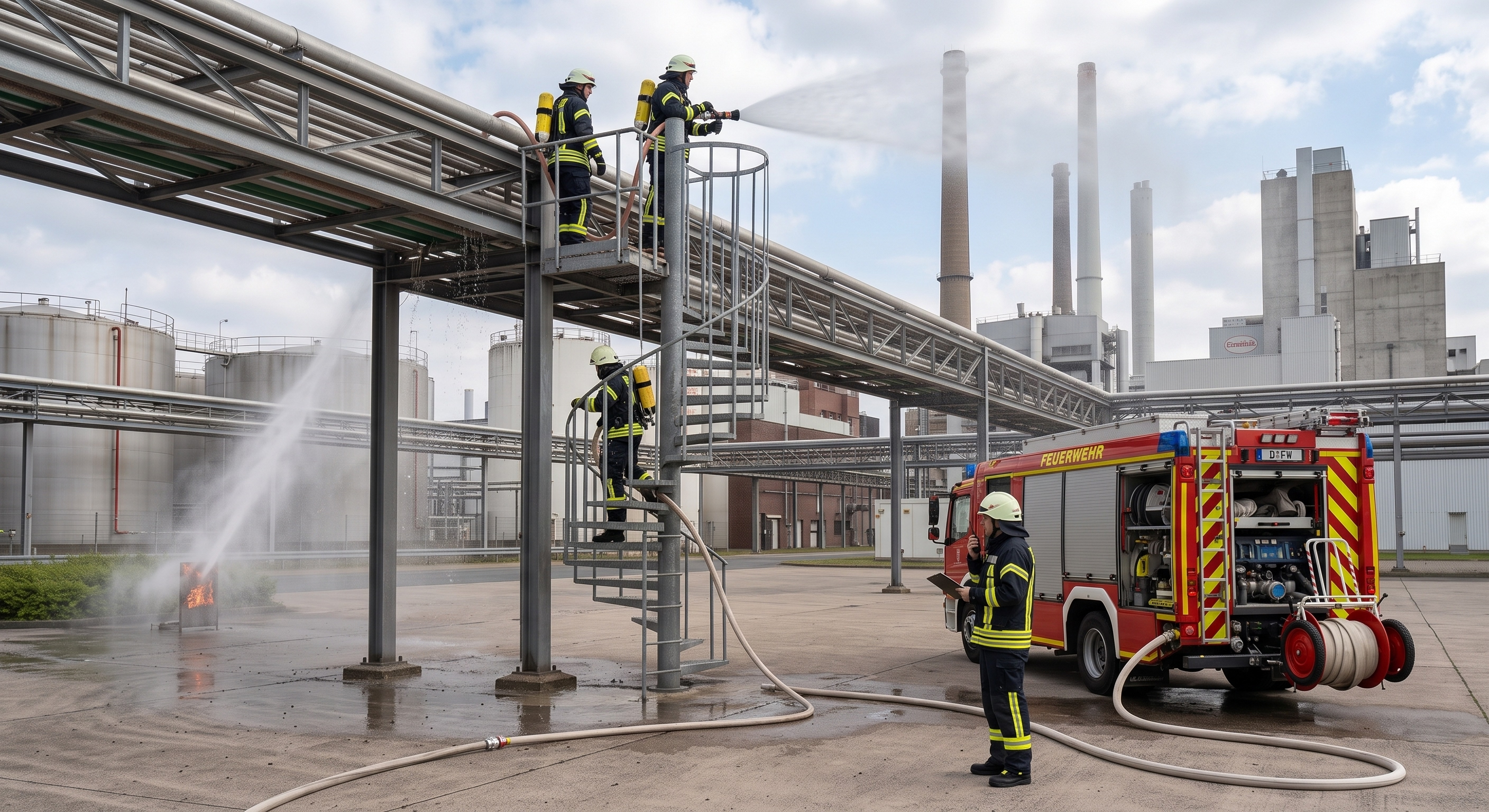
Future-Proof Workforce Scheduling for Emergency Responders
Attracting and retaining qualified shift personnel requires transparent scheduling structures. A digital scheduling system reduces administrative overhead and actively involves the team in operational processes:
- Digital self-service: Employees can view their rosters via an app and submit holiday requests or sick leave digitally.
- Reduced administrative burden: Automated reporting processes relieve managers of day-to-day administrative tasks, leaving more time for training and operational tactics.
- Mapping collective agreements: Specific rules for premiums and working hours, for example based on the TVöD (public service collective agreement) or site-specific company agreements, can be mapped within the system.
FAQs
Work efficiency, flexibility & team communication
Can shyftplan take specific qualifications (e.g. G26.3, driver/operator) into account?
Using an integrated qualification matrix, mandatory certificates (e.g. breathing apparatus fitness, driving licence categories) can be defined for every shift and role. Scheduled allocations that do not meet these criteria are automatically blocked during rostering.

Can we configure our own rules for scheduling?
Company-specific parameters can be individually configured for the rostering process. These include, among others, the prioritisation of specific roles, the consideration of critical workstations, and rules for a transparent distribution of shifts.
Can external security services or part-time staff be integrated?
Internal emergency responders, part-time fire service personnel, and external service providers can be managed together in a central overview. This provides a holistic view of the personnel security situation on site.
How does the system react if staffing falls below the minimum requirement?
shyftplan visualises understaffing in real time, both in long-term planning and in the event of short-term absences. Warning messages immediately alert the planner to any deviations from the required operational strength.
Does the software help ensure compliance with working time regulations during 24-hour shifts?
Compliance with stored statutory and collective agreement rest periods is checked during every allocation. Warnings alert planners to any shortfalls, thereby supporting the implementation of health and safety legislation as well as internal company guidelines.
How does the system process a mix of 24-hour shifts and day shifts?
Different shift patterns can be mapped simultaneously within a single scheduling interface. This includes complex 24-hour shifts, rotating shifts, and regular day shifts for operational staff.