Integrated shift planning for SAP SuccessFactors. Automated and industry-proven.
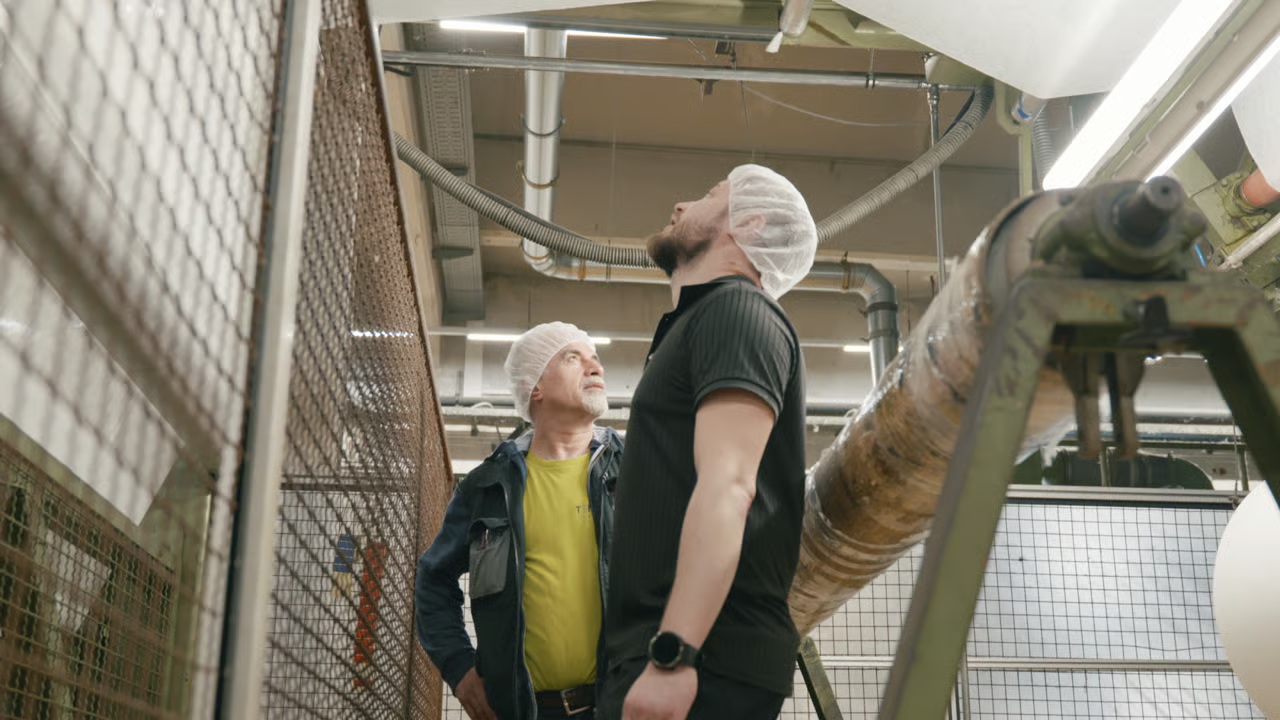
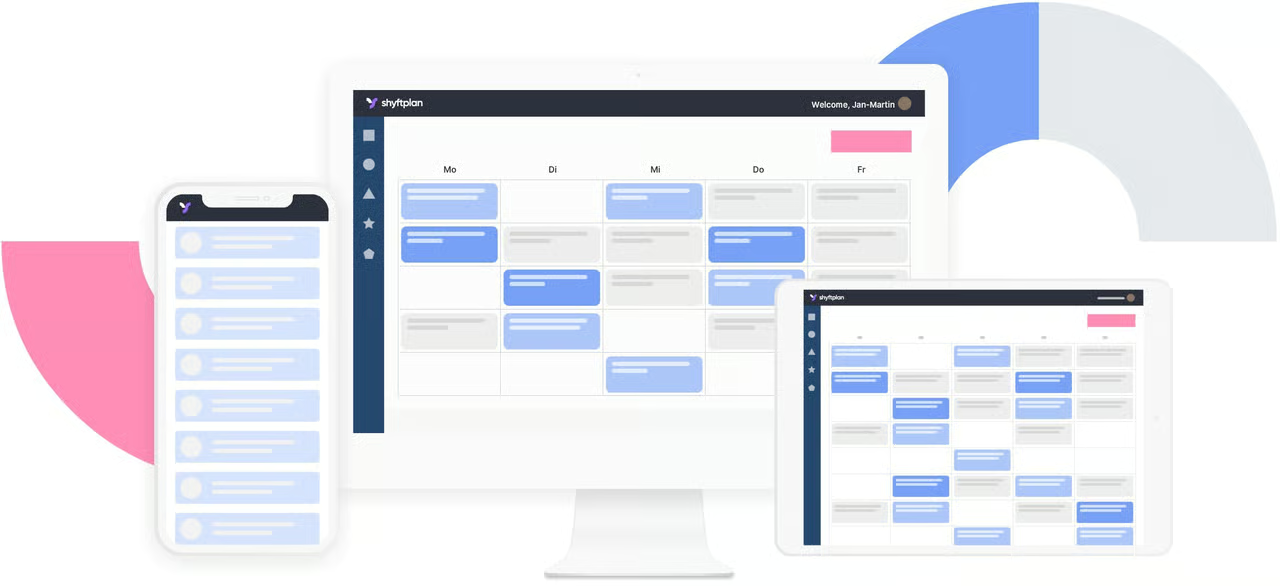
shyftplan at the Future Work Lab: The Future of Shift Work in a Practical Test
Why digital shift planning is the key to flexible and human-centered manufacturing
The Future Work Lab of the Fraunhofer IAO in Stuttgart shows what the working world of tomorrow could look like. Alongside robotics, AI, and Industry 4.0 applications, the focus there is also on people. The central question is how shift work can be designed to be efficient, flexible, and at the same time, attractive. With shyftplan, this future becomes tangible: The software is part of the demonstration environment, allowing visitors to experience how digital solutions can improve shift operations.
Why shyftplan Fits into the Future Work Lab
The contact between Fraunhofer IAO and shyftplan was established because renowned industrial companies were already using the solution successfully. "shyftplan is one of the well-known providers on the market, especially among industrial companies," explains Dr. Stefan Gerlach, Head of the Production Management Team at Fraunhofer IAO. Fraunhofer first learned about shyftplan through the institute's clients, and it quickly became clear that the solution is widely used in the industry, particularly by larger manufacturing companies.
For Dr. Gerlach, the added value is obvious: Consulting projects related to flexible workforce deployment can be illustrated in a practical way at the Future Work Lab using a real tool. The lab combines numerous Industry 4.0 demonstrators, assistance systems, and automation solutions. shyftplan complements these with the crucial human factor, making it clear that digitalization affects not only machines but also work organization.
The Challenges in Shift Operations
Dr. Gerlach describes the reality in many companies:
- Fragmented Systems: Qualification management, time and attendance, vacation planning, and capacity planning run in separate tools.
- Lack of Overview: Planners rely on experience rather than current data.
- Broad Impact: It's not just production employees; maintenance, service, and NC programming are also tied to shift systems. Especially in highly specialized manufacturing environments, such as when parts are produced in a batch size of five, highly qualified programmers are indispensable and must be available during shift operations.
- Volatile Orders: Small series and short-term changes require spontaneous adjustments.
shyftplan addresses these exact points: Through integration and a clear overview, decisions can be made based on data, which is a decisive step towards more efficiency and planning security. Bundling information from various sources (time accounts, vacation balances, qualifications, training schedules, and capacity requirements) leads to a level of transparency that many companies lack today.
Flexibility Needs More Than Software
But software alone does not make a factory flexible. Dr. Gerlach puts it in a nutshell: "Flexibility doesn't come from the software, but from the framework."
Companies that work exclusively with a permanent core workforce can usually still create their shift schedules with relative ease. But as soon as different working time models, qualification requirements, or changing order situations come into play, traditional planning reaches its limits. In such scenarios, software like shyftplan becomes indispensable because it consolidates data from different systems, thereby securing the planning process.
The Human at the Center of the Smart Factory
Automation replaces repetitive tasks, but innovation comes from people. Dr. Gerlach emphasizes: "You get innovation into your processes through people. Even if we automate repetitive work, we will need people to maintain robots, control AI, and develop new solutions."
He also connects this to the principles of Lean Management: Continuous improvement is only possible with the active contribution of the workforce. At the Future Work Lab, shyftplan demonstrates how digital support strengthens people instead of replacing them.
New Work in Shift Operations
"In the office, flextime is a matter of course. Why shouldn't that also be possible in shift operations?" asks Dr. Gerlach.
New Work should not be a privilege of offices. Participation and flexibility can also be realized in a shift environment if employees are given responsibility: "The operational employees must take on responsibility, and for that, they need the right tools."
In projects, the Fraunhofer IAO has found that pure automation leads to dissatisfaction. Acceptance only arises when employees are actively involved. It is crucial not only to delegate responsibility but also to secure it with suitable guardrails to ensure that workstations are reliably staffed and legal requirements are met.
Flexibility thus becomes not only an organizational necessity but also a key feature of attractiveness. Companies that allow their employees to have a say gain an advantage in a tight labor market. Highly qualified specialists, in particular, are increasingly paying attention to how flexible their working conditions are.
Mobile Tools as the Standard
Today, many teams coordinate pragmatically but in an unorganized and privacy-critical manner via WhatsApp. Dr. Gerlach calls for this need to be addressed and supported by professional solutions.
Employees want their information directly on their mobile phones, in a workflow that is clear, up-to-date, and secure. Classic B2C apps are often more user-friendly than many traditional B2B planning systems. shyftplan shows how these expectations can be combined with industrial-grade functional depth.
Furthermore, compliance plays an important role: Companies must ensure that information does not flow through unofficial channels. shyftplan offers a solution here: mobile, intuitive, and at the same time, legally compliant. Even if data protection is sometimes perceived as excessive, as Gerlach notes, shyftplan at the Future Work Lab shows that security and user-friendliness are indeed compatible.
Shift Scheduling as the Key to the Factory of the Future
The example at the Future Work Lab makes it clear: shift scheduling is a key topic for the factory of the future. shyftplan demonstrates in a practical way how digital solutions:
- Enable flexibility,
- Simplify planning processes,
- Increase employee satisfaction,
- and ensure compliance at the same time.
Companies that dare to entrust their employees with responsibility and support this with the right digital tools create the foundation for a resilient and innovative working world.
For Dr. Gerlach, one thing is certain: The human remains at the center. Tools like shyftplan make visible how technology puts this principle into practice, today and in the future.
How the Siemens Energy Workforce Benefits from shyftplan
The switch to a digital solution brings measurable success in practice. At Siemens Energy, automated shift scheduling with shyftplan led to higher employee satisfaction and more productivity. Complex planning requirements and legal regulations are now managed effectively there.
Learn in detail how Siemens Energy benefits from a digital solution.
Do you need to consider data protection when creating a work schedule?
Since personal data is required for a work schedule, data protection naturally applies here as well. A shift schedule should not simply be posted for everyone to see, and it should certainly not be photographed and shared, for example, via messenger—something that often happens in smaller businesses. However, in larger businesses, there can also be problematic interactions between work schedules and data protection. For example, if there is an Excel document that all employees can access and thus view the personal data of others, data protection is violated. Therefore, a shift schedule is a document containing confidential personal data and should be treated as such.

How do I create a data protection-compliant shift schedule?
- Never post shift schedules publicly
- Do not send photos of shift schedules to your employees
- Limit employee access to shift schedule files, such as through an intranet
- Ensure that each employee can only view their own data
A scheduling software can assist in creating a data protection-compliant shift schedule. This is particularly beneficial for larger companies, as smart solutions consider laws and legal requirements when creating shift schedules, helping them stay on the safe side.
Who is allowed to view the shift schedule?
Regarding data protection, the law is clear on work schedules: not every employee is entitled to view the entire shift schedule. Similarly, every employee has the right to prevent the publication of the schedule—even within the company.