Integrated shift planning for SAP SuccessFactors. Automated and industry-proven.

Personnel Deployment Planning
Increasingly complex business processes and the fast pace of modern working life demand maximum resource optimization and long-term workforce planning—taking employee qualifications into account while maintaining flexibility.
Personnel deployment planning is often carelessly equated with shift scheduling. As long as someone is on-site when needed and gets the job done, it seems sufficient. But there's so much more behind effective personnel planning—untapped potential that is often overlooked.
Successful workforce planning can determine the success or failure of a company—or at least prepare it for all eventualities. But what does personnel deployment planning actually look like in practice, and what factors influence its success? The following guide provides an overview and answers key questions on the topic of personnel deployment planning.

What Is Personnel Deployment Planning?
Personnel deployment planning (also known as PEP) generally refers to the short-, medium-, or long-term planning of employee assignments and their allocation to specific departments and positions within the company. The goal of PEP is to determine staffing needs and then assign the right number of employees with the right qualifications to shifts – ensuring optimal use of the resource "workforce". Personnel deployment planning also serves as the foundation for many key HR decisions. For example: Where are there bottlenecks? Is additional staff needed?
Personnel deployment planning includes the following areas:
- Personnel controlling and staffing needs planning: Determining and continuously analyzing staffing requirements or current workforce levels to respond quickly and flexibly to new developments.
- Hiring of new, qualified employees if staffing shortages arise due to future demand and positions cannot be filled internally—or if the company is growing.
- Employee transfers to enable optimal resource utilization (e.g., to cover seasonal fluctuations or anticipated demand peaks) or to provide new incentives for employees (e.g., job rotation).
- Personnel development to enhance employee skills and coordinate the implementation of new initiatives, thereby ensuring employee satisfaction (e.g., job sharing, job rotation, job enrichment).
- Time tracking and working time planning to align working hours and shift scheduling with workload demands.
- Employee offboarding, when someone leaves the company. Shift scheduling can then be reassessed and reorganized accordingly.
Personnel deployment planning is closely interconnected with various other departments and sub-departments. These include Controlling, HR and Organizational Development, Recruiting, the Legal Department (e.g., regarding collective agreements), and Strategic Management. A holistic PEP approach must consider both qualitative and quantitative factors, as well as timing.
Who Is Responsible for Personnel Deployment Planning?
In many companies, strategic personnel deployment planning falls under the responsibility of top management. They decide which departments or locations need reinforcement or should be newly staffed. Within this context, personnel deployment planning is also a key component of the company's overall strategy, setting priorities accordingly.
Operational responsibility, on the other hand, lies with the HR department. It determines workforce requirements, maintains an overview of open positions and departmental changes, and supports department heads in planning and deploying employees.
Close communication between management and HR is essential for a holistic approach to personnel deployment planning. Depending on the size of the company and the structure of the HR department, responsibilities may be distributed differently.
Personnel Deployment Planning in Practice
Especially in small and medium-sized enterprises, comprehensive personnel deployment planning is often lacking, resulting in limited visibility into existing resources and potential. Yet, a well-rounded PEP is a key factor in business success—mainly because it enables companies to align various interests. For all organizations, it’s beneficial to regularly review and refine their personnel deployment planning.
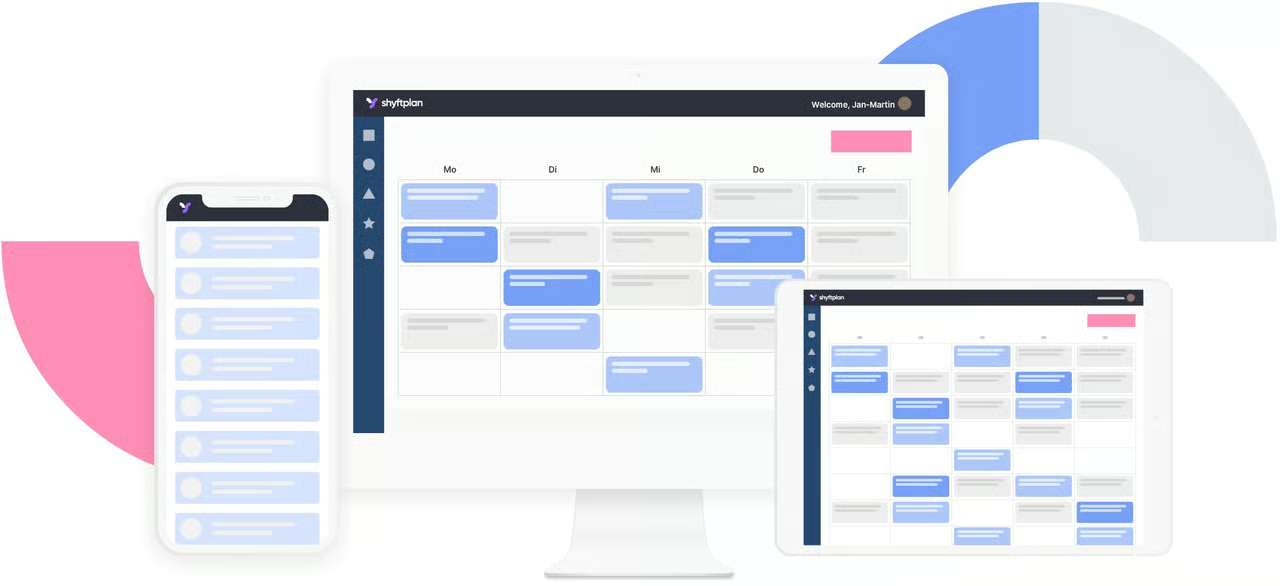
There are also software solutions available that can help determine staffing needs, create shift schedules, and manage absences. Regardless of whether a company chooses a manual or digital approach, certain elements are always part of effective PEP in practice.
To use employees' skills and knowledge efficiently, their qualification profile must match the requirements of the position they are assigned to. Naturally, individual interests and development goals should also be considered. These two factors alone can make personnel deployment planning complex and hard to manage. On top of that comes the actual staffing demand, which needs to be reassessed regularly.
These three components—skills match, individual preferences, and staffing demand—are the most critical factors in personnel deployment planning and must be continuously evaluated. In practice, they determine how duty and shift schedules are created and how flexibly a company can respond to unexpected absences.
Challenges of Personnel Deployment Planning
In times of economic and technological change, as well as demographic and social challenges, the complexity of personnel deployment planning continues to grow. Employees are placing higher demands on their employers, valuing opportunities for personal development, participation, and flexible work time models. Companies in traditional industries and rural areas, in particular, are finding it increasingly difficult to recruit suitable staff. They are feeling the impact of the skilled labor shortage.
For these companies, it is crucial to have a functioning strategic personnel deployment plan that can identify trends and develop long-term strategies to retain and attract employees. The positioning of personnel deployment planning within the company, as well as close cooperation between HR and management, is key to success. Together, trends are analyzed, current developments within the company are questioned, and a long-term strategy for securing resources is developed.
Success Factors for Effective Personnel Deployment Planning
Personnel deployment planning can be very complex and demanding, depending on the company. The following factors are crucial for successful personnel deployment planning:
- Clear Goals, Priorities, and Framework: The goals, priorities, and conditions for the PEP solution should be defined and communicated. Economic criteria may lead to a different strategy than a focus on employer attractiveness or employee satisfaction. Companies should be flexible and adapt their planning in response to changing internal or external conditions.
- Effective Personnel Controlling and Analysis: Good personnel controlling and careful analysis help identify bottlenecks and ensure efficient operations. Balancing the interests of the company and its employees is of utmost importance. Employee qualifications and availability should be considered alongside their preferences, wishes, and development opportunities.
- Software for Planning: Planning based on Excel files is inefficient in the long run. Medium-sized and large companies can benefit from the use of specialized software. However, this should only be selected and implemented after a sufficient pilot phase and thorough consideration of all factors.
- Consideration of All Workforce Types: Part-time workers, temporary workers, or interns should also be included in the personnel deployment planning to provide a realistic overview of available capacity.
- Involvement of Employee Representatives: If there is an employee representative body (such as a works council), it should be involved in the planning. Changes in personnel planning or decisions directly or indirectly affecting employees should be communicated transparently, with employee needs and concerns taken seriously.
- Long-Term Flexibility: A long-term plan with room for short- or mid-term adjustments allows for flexible responses to changes.
- Promoting Satisfaction and Resource Optimization: Professional personnel deployment planning promotes both customer and employee satisfaction and ensures resources are allocated effectively. Even small or medium-sized companies, where personnel deployment is often less strategic, benefit from continuous demand analysis and strategic planning. Discontented employees, uneven distribution of workload, or misplaced focus can drain valuable resources and diminish competitiveness. Close collaboration between departments, HR, and management enables a company to act strategically and plan for the long term.
What is the Difference Between Personnel Deployment Planning and Workforce Management?
Workforce management and personnel deployment planning are two terms that are often used synonymously. Just like personnel deployment planning, workforce management is based on the concept of demand orientation and aims to optimize the use of personnel. However, personnel deployment planning can be understood as a component of workforce management, meaning that the term workforce management has a broader scope than personnel deployment planning.
In addition to personnel deployment planning itself, workforce management also includes workforce demand forecasting, the design of specific work-time models, and time management within the company. Workforce management is not only concerned with employees and the resource of labor but also deals with the deployment of mobile resources and work tools, such as vehicles, machines, and materials.
Optimizing Personnel Deployment for Long-Term Success
A well-thought-out and strategically aligned personnel deployment plan is essential for the long-term success of a company. It not only enables the efficient use of resources but also contributes to improved employee satisfaction and enhanced competitiveness. In an increasingly complex and dynamic work environment, it is crucial to plan flexibly and proactively to meet the demands.
Would you like to learn more about how to optimize your personnel deployment planning? Book a demo to see how our solution can help you effectively manage your workforce and achieve your business goals.