Integrated shift planning for SAP SuccessFactors. Automated and industry-proven.

Personnel Planning vs. Personnel Deployment Planning (PDP) – The Difference
Personnel Planning and Personnel Deployment Planning (PEP) – These two terms are often used interchangeably when it comes to employee management. While both are applied in this field, there are some key differences between them. In this article, we will explain how they are distinct from each other.
At a Glance
Personnel Planning
- Long-term, strategic planning
- A comprehensive process that determines staffing needs and aims to ensure there are enough employees available in the long term
- Also focuses on the qualifications of employees
- Includes approaches such as agile personnel development
Personnel Deployment Planning (PEP):
- Short-term planning at the operational level
- Focuses on the question: Which employees should work on which projects or shifts, and when?
- Based on the current needs and resources of the company
- Considers factors such as working time models, shift planning, vacation scheduling, and the efficient use of available workforce
- Shift schedules are a central component
- Must be aligned with personnel planning, as without available staff, they cannot be deployed effectively.
Goals and Purpose of Personnel Planning
Personnel planning aims to forecast and manage the staffing needs of a company to ensure it can achieve its objectives and long-term strategy. Successful personnel planning is the foundation for effective personnel deployment planning. The following points are key to its success:
Ensuring Staffing Needs
The fact is: Without employees, no company can operate. One of the main objectives of personnel planning is to ensure that the company has enough qualified staff to meet current and future demands. To achieve this, HR managers must first determine how many employees are needed and what qualifications they should have. This is typically done through a needs analysis.
Optimization of Employee Qualifications and Skills
Of course, it's not enough to simply hire a certain number of people—existing employees must also possess the necessary qualifications and skills to achieve the company’s objectives. This may require identifying and implementing training and development programs to further educate employees. A needs analysis is also helpful in this regard.
Strategic Alignment
Personnel planning should ensure that the composition and qualifications of the workforce align with the company’s long-term strategic goals. This includes identifying key competencies and talents. Moreover, especially in times of skilled labor shortages, it is crucial for companies to offer their employees opportunities for growth within the organization, enabling them to develop personally. This is often referred to as personal or agile personnel development.
Adaptation to Change
Naturally, the demands on companies are constantly changing. As a result, personnel planners must also respond to shifts in the environment, market, and technology. The goal of effective personnel planning should be to ensure that the workforce structure is adapted to meet these evolving demands. In practical terms, this means that HR professionals must closely monitor current trends. Ideally, they should be able to forecast which qualifications will be required from employees in the near future and proactively seek or hire the necessary talent.
Talent Management
Identifying key individuals and fostering talent are also key objectives of personnel planning. By doing so, HR managers can ensure that the company has the right leaders and experts in place. Additionally, they can create incentives by actively developing and challenging employees, helping them grow and stay motivated.
Goals and Purpose of Personnel Deployment Planning (PDP)
Overall, the purpose of personnel deployment planning is to effectively utilize the available workforce, avoid bottlenecks, improve work quality, and enhance employee satisfaction. It takes into account short- to medium-term operational requirements.
Efficient Resource Utilization: The Right Person in the Right Place
The primary goal of personnel deployment planning is to ensure that the available employee resources are used efficiently, particularly on a short-term or even daily basis. This involves assigning employees to specific tasks, projects, or work areas to make the best use of their skills.
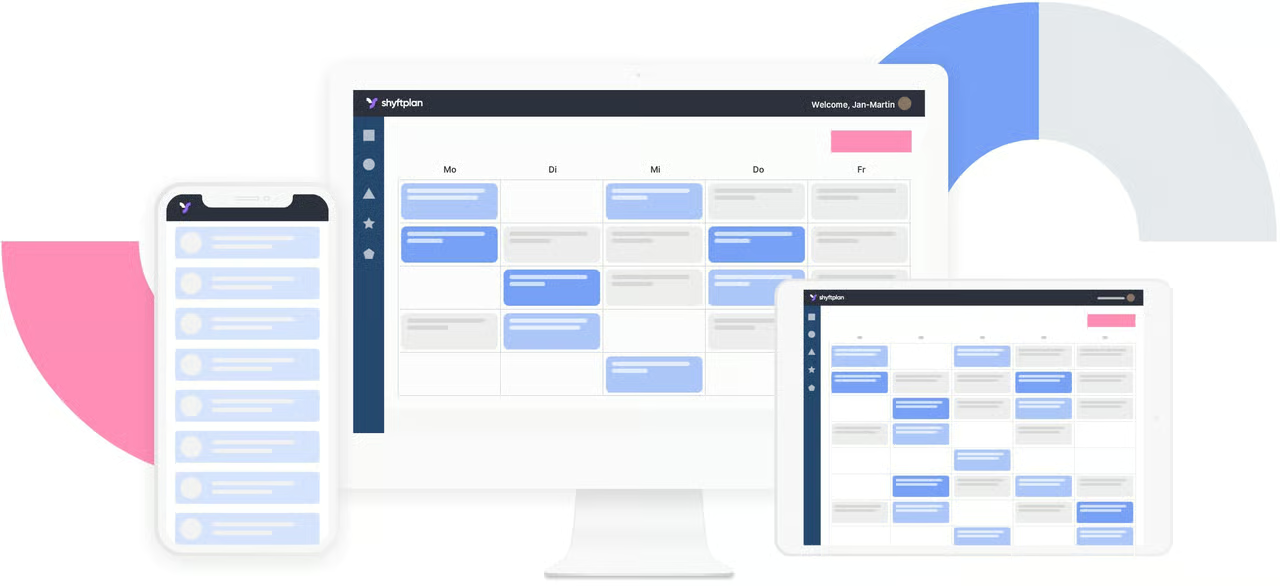
A key component of personnel deployment planning is creating shift schedules and communicating them to employees. This way, every employee knows when and where they are expected to work.
Flexible, Demand-Driven Workforce Provision
Effective personnel deployment planning ensures that there are always enough employees available to meet current work requirements. This includes considering working hours, shift schedules, and vacation times.
It may also be necessary to respond to unforeseen events, such as when employees are absent due to illness or when short-term supply shortages result in too much staff for too little work.
Avoidance of Overload and Bottlenecks
Precise personnel deployment planning helps prevent overloads and reduce bottlenecks. This ensures a balanced workload, saves costs, and promotes employee satisfaction. Companies lose money when employees are idle due to a lack of tasks. On the other hand, employees become frustrated when they are either underwhelmed or overwhelmed by their workload.
Adaptation to Seasonal Fluctuations
Flexible personnel deployment planning allows companies to respond swiftly to seasonal fluctuations or peak periods. It ensures that sufficient staff is available when demand is high and enables adjustments during quieter times.
Consideration of Qualifications and Skills
When assigning employees, their qualifications and skills must also be taken into account. This ensures that the right people are assigned to the appropriate tasks. It contributes to the effectiveness and quality of work, leads to more satisfied employees, and also reduces costs for the company.
Compliance with Labor Laws and Regulations
All of these aspects must also take labor laws, collective agreements, and other regulations into account. If working hours and conditions do not comply with legal requirements, it can have serious consequences for a company. This also applies to how shift schedules and, particularly, short-term changes are communicated. Such communication must also comply with GDPR (General Data Protection Regulation) requirements.
Employee Satisfaction and Work-Life Balance
More than just the work itself: Personnel deployment planning should also consider aspects of employee satisfaction and work-life balance. A balanced distribution of working hours and consideration of individual needs help promote job satisfaction and well-being.
Conclusion
Personnel planning focuses on the long-term strategic direction of the company, ensuring that the right employees with the appropriate qualifications are in place. Identifying key competencies and talents plays a central role. This process also includes agile approaches such as personnel development to further advance employees within the company.
Personnel deployment planning, on the other hand, operates on a short- to medium-term, operational level. Its goal is to efficiently deploy the existing workforce, avoid overloads, reduce bottlenecks, and respond flexibly to changes and seasonal fluctuations. Key considerations include working time models, shift planning, and vacation scheduling, ensuring optimal resource utilization and promoting employee satisfaction.
How much does shyftplan cost?
The total price for your company consists of the licensing fee for either the Professional or Enterprise package and the number of employees to be scheduled. Feel free to contact us for a specific quote. Apart from the licensing fee, there are no additional costs with Shyftplan. This way, you benefit from a clear Total Cost of Ownership (TCO).

Can shyftplan be integrated with my existing systems?
Yes, with shyftconnect, you can connect not only nearly all SAP systems but also other common HR and planning tools with shyftplan.
Do I need programming skills for setup?
No, you don’t need programming skills to set up shyftplan. All settings can be easily configured through the user interface. Programming skills are only needed if you plan to integrate other software systems.