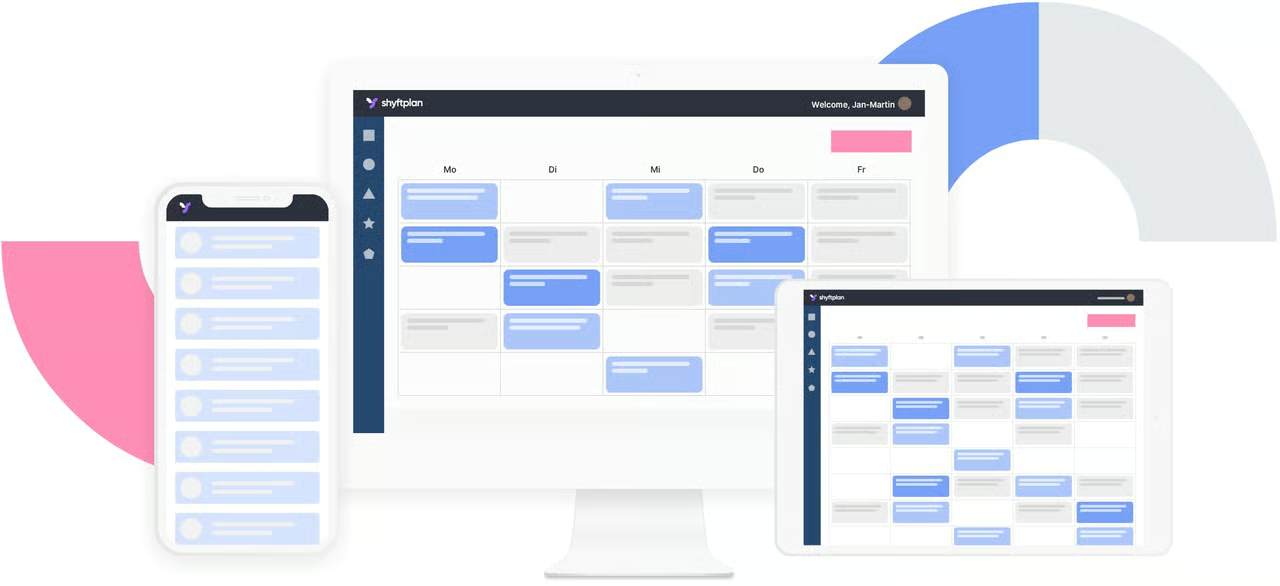
Integrated shift planning for SAP SuccessFactors. Automated and industry-proven.

Shift Models in Industry and Manufacturing
Industrial companies must work efficiently to withstand rising costs and competitive pressure. This requires optimal shift models to ensure continuous production, even during unforeseen events.

Efficiency is more critical than ever in manufacturing and industrial sectors. Rising energy and raw material prices, intense competition, and a severe shortage of skilled workers force companies to optimise their resources. Shift models are the foundation of this effort, dictating exactly how efficiently personnel are deployed.
The wrong shift model leaves companies struggling to handle absences or sudden spikes in demand. The right model ensures smooth operations, a satisfied workforce, and peak efficiency. This article explores the available shift models and highlights those best suited for industrial environments.
Why are shift models so important for the industry?
Shift models are vital for any large organisation, but industrial and manufacturing companies face unique challenges. They must maximise the uptime of expensive machinery, avoiding both costly downtime and overstaffing. They also need immense flexibility to navigate unforeseen events like supply chain bottlenecks, resource shortages, or sudden energy price hikes. Given the severe shortage of skilled workers in these sectors, retaining qualified staff is essential.
A strong shift model delivers on all fronts: it provides operational security and flexibility while offering employees reliable, adaptable schedules. Allowing staff to input personal preferences when creating schedules also boosts engagement. Choosing the right model is therefore a core driver of business success.
How do shift models contribute to a company's profitability?
Shift planning might look like a purely administrative task, but it holds massive optimisation potential. Implemented correctly, the right shift model directly drives profitability and competitiveness.
Continuous Production and Less Downtime
The right shift model enables fully continuous production without costly interruptions. This is absolutely essential for large companies running expensive machinery round the clock.
Maximum Productivity
Optimised scheduling ensures the best possible use of resources—including machinery, facilities, and human labour—maximising overall operational output.
Flexible Real-Time Response
Well-designed shift models allow companies to adapt instantly to demand fluctuations. Adjusting shifts in real time means you can easily scale staff up or down to manage unforeseen events. Note: This requires intelligent scheduling software to automatically backfill shifts based on real-time employee availability.
Employee Satisfaction through Demand-Oriented Scheduling
Better planning security and flexible scheduling directly accommodate employee needs. This boosts job satisfaction, which naturally translates into higher motivation and efficiency on the floor.
Long-Term Health through Rotation Models
Rotation patterns prevent employees from working the exact same shifts indefinitely. This eases the physical toll, helps the body adjust, and protects long-term health.
Which shift models are most common in industry and manufacturing?
In industrial settings, keeping machines running continuously is often the top priority. This is especially true for operations like blast furnaces or refineries, where halting and restarting equipment wastes immense time and energy. As a result, companies rely heavily on continuous shift systems (Vollkonti), typically running 4- or 5-shift models.
Continuous and Multi-Shift Systems
Continuous (Vollkonti) simply means uninterrupted 24/7 operation. While this can theoretically be managed with a basic 3-shift system, 4- and 5-shift models are far more effective. They offer greater flexibility, ensure adequate staffing at all times, and utilise labour much more efficiently without burning out the workforce.
What makes a good shift model?
There is no one-size-fits-all solution; the model must fit your specific operation. However, every successful shift model must be flexible, compliant, and intelligently managed.
- Flexible: Manufacturing faces frequent peak demands and unexpected fluctuations. Shift models must allow for rapid adjustments. Modern AI-driven planning tools support this by identifying bottlenecks early and automatically backfilling vacancies.
- Compliant: Companies must strictly adhere to legal, internal, and union regulations regarding working hours and mandatory breaks. Data privacy is equally critical. For example, printed schedules pinned up in break rooms are often photographed and shared via messaging apps—a direct GDPR violation.
- Intelligent: Managing this complexity requires modern software. Rigid tools like Excel cannot handle short-term changes efficiently. AI-supported solutions can generate optimised shift schedules for thousands of employees in minutes, automatically respecting all operational rules.
Which shift types are there?
Here is a brief overview of common shift types used in the industry:
- Fixed Shift Systems: Employees work set, repeating schedules that never rotate.
- Alternating Shift Systems: Shifts rotate in a predictable pattern (e.g., an Early-Late-Night rotation).
- Rotation Patterns:
- Fixed Rotation: Shifts change on a strict, regular schedule (e.g., weekly or monthly).
- Self-Selected Rotation: Employees choose their shifts within a defined framework.
- Demand-Based Rotation: Schedules adjust dynamically based on seasonal fluctuations or operational needs.
- 12-Hour Shift Systems: Longer daily shifts (usually 12 hours) mean fewer workdays per week, providing extended rest periods.
- 15-, 18-, or 21-Shift Models: The number indicates the total shifts planned per week.
- 15-Shift: 3 shifts a day, 5 days a week.
- 18-Shift: 3 shifts a day, 6 days a week.
- 21-Shift: 3 shifts a day, 7 days a week (fully continuous).
How to find the right shift model
Finding the perfect model starts with a thorough analysis of your company’s unique needs. Do you require continuous 24/7 operation? How important is employee autonomy? Every model has trade-offs. A 5-shift system is ideal for continuous operations but may present labour law challenges if night work is heavily restricted in your region. Alternatively, if the work is highly repetitive, rolling models are highly effective at maintaining employee focus and satisfaction over time.
Siemens Energy: A Prime Example of Modern Shift Scheduling
With over 91,000 employees shaping the future of energy, Siemens Energy faces the typical workforce challenges of large industrial operations: last-minute absences, varying site requirements, and highly specific qualification needs. By implementing shyftplan across multiple locations in 2020 to automate shift scheduling, the company reduced its daily planning effort from five hours to just two, while driving average machine utilisation from 60 % up to 90 %.
What does a continuous shift mean?
A continuous shift model keeps operations running 24/7, including weekends and holidays. To sustain this schedule legally and efficiently, four to five dedicated teams typically rotate through early, late, and night shifts.

How does a 12-hour shift schedule work?
In a 12-hour shift model, employees alternate between extended day and night shifts to maintain seamless operations. To offset the longer daily hours, they receive significantly more days off per month, ensuring their total working time perfectly complies with legal and contractual limits.
What are the legal regulations regarding shift duration in Germany?
Under the German Working Hours Act, a standard shift must not exceed eight hours. Extending it to a maximum of ten hours is legally permitted only if the average daily working time remains at eight hours over a six-month period.