Integrated shift planning for SAP SuccessFactors. Automated and industry-proven.

Software Acceptance Through Employee Participation
Higher process stability through user-oriented workforce scheduling
The digital transformation of shift scheduling in the industrial sector rarely fails due to technology, but rather due to a lack of software acceptance. Planning software can only reduce complexity and guarantee legal compliance if it is actively used by the workforce. If there is no operational added value for the employees, shadow IT and data gaps emerge, undermining any process stability.
High acceptance is only achieved when user-oriented workforce scheduling removes administrative hurdles and enables autonomy. When processes for flexible working time arrangements are automated in a legally compliant manner, the software transforms from an instrument of control into a valued tool. This article demonstrates how you can systematically increase system usage and sustainably secure your production workflows through targeted employee involvement.

Resolving Conflicting Goals in Industrial Shift Scheduling
Daily workforce scheduling is a constant tug-of-war between three often opposing interests. To achieve high software acceptance, a solution must defuse this exact conflict:
- Production: To ensure machine availability and production targets, day-to-day operations require constant flexibility, such as short-notice cover for absences or unplanned overtime.
- Administration & HR: This required flexibility directly collides with the obligation to ensure legal compliance. Collective agreements, company agreements, and Working Time Regulations set strict boundaries that tolerate no exceptions.
- Workforce: When short-notice schedule changes are the norm, employees' work-life balance suffers. The feeling of constant external control inevitably leads to frustration and a defensive attitude towards new processes.
User-oriented workforce scheduling structurally resolves this conflict of objectives: it must be strategically designed to enable flexibility for production, technically safeguard legal boundaries, and simultaneously offer the workforce digital autonomy.
Causes for a Lack of Software Acceptance Among the Workforce
The introduction of digital planning tools often meets resistance at the operational level. This rejection typically stems from four structural problems in system design:
- Perceived surveillance: Detailed data collection raises concerns among the workforce regarding seamless performance monitoring by management.
- Loss of informal processes: Unbureaucratic shift swapping via private messaging apps or direct agreements is eliminated. If the new system is more rigid than previous procedures, employees will refuse to use it.
- Lack of user-friendliness: Nested menus and complex interfaces make operation difficult. In contrast to established smartphone applications, this lowers the willingness to use the system daily.
- One-sided distribution of benefits: If the software solely reduces the administrative burden for management, production staff merely experience an increased workload for data entry. Without personal benefit, there is no incentive to participate.
Modern workforce scheduling must address these factors directly. Systematic usage only occurs when the software provides employees with measurable scope to shape their working hours through self-service functions.
Software Acceptance Through Consistent User-Friendliness
The user-friendliness of software determines data quality and process speed. In industrial practice, a solution must function intuitively under demanding conditions to ensure the workforce's willingness to input data.
Requirements for the System Architecture:
- Clearly structured interfaces: All functions must be operable without lengthy training sessions. A logical arrangement of task areas (e.g., rota view, swap requests, time account) is essential for daily use.
- Real-time synchronisation: Information about shift changes or approvals must be available on employees' devices without delay. This creates transparency and is the foundation for trust in the digital solution.
Employee Participation Through Integrated Self-Service Functions
Targeted employee participation in the planning process is an effective tool for increasing satisfaction without relinquishing operational control over production. Modern systems allow for the legally compliant delegation of sub-processes to the workforce.
Structured Feedback and Structuring Options:
- Compliant shift swapping: Employees can independently offer shifts for swapping. The system automatically checks in the background whether legal rest periods are observed and whether the required professional qualifications for the workstation are met. This massively relieves shift managers of administrative tasks.
- Preference and availability management: The ability to log preferences for certain shift patterns or days off in the system increases the predictability of private life. When these requests are objectively considered by algorithms during rota creation, software acceptance rises across the entire team.
- Transparency of time accounts: Direct insight into one's own working time account and holiday status reduces queries to the HR department and fosters trust in the accuracy of the data.
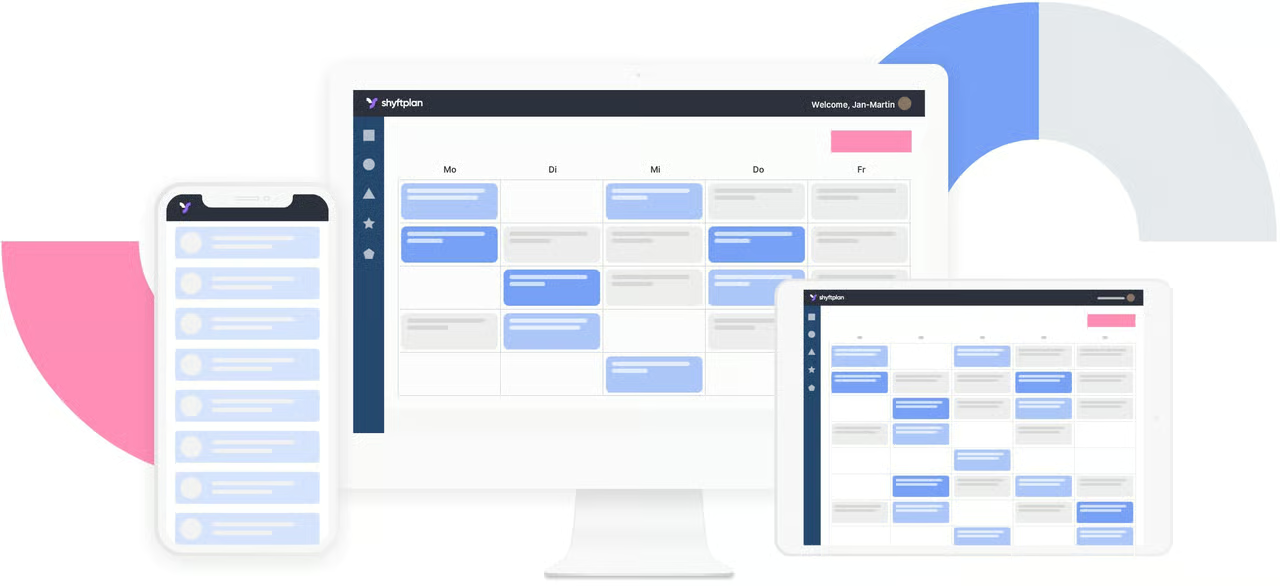
- Device-independent, mobile access: Via a mobile application, employees have their current shift schedule with them at all times. An integrated messaging function for company announcements consolidates the flow of information in a secure location. This puts an end to messy communication via private messaging apps, ensures data protection, and guarantees that relevant news reliably reaches production staff.
System Introduction Methodology: The Path to Seamless Integration
Implementing new scheduling software deeply impacts daily routines. It replaces familiar manual spreadsheets with digital processes and partially shifts responsibilities directly to the employees' devices. A structured approach to this transition ensures long-term usage and the success of the project. Utilise our change management checklist for the systematic planning of this transition.
Phases of System Integration:
- Analysis of current processes: Before implementing a technological solution, existing planning procedures must be checked for inconsistencies and optimised as part of the digitalisation process. User-oriented workforce scheduling only operates efficiently if the underlying rules are clearly defined.
- Involvement of early adopters: Opinion leaders from the production floor should be included early in the testing phase. Their feedback on practical application in daily shift work is invaluable for avoiding configuration errors and preparing for broad software acceptance.
- Phased rollout: Instead of an immediate company-wide switch, a pilot project in a defined area is recommended. The insights and successes gained there serve as a reference for further rollout across the company.
Economic Effects of a Software Solution
Active use of the scheduling software by the workforce leads to directly measurable results in production and administration:
- Reduction of overtime: When employees proactively log their availability and swap requests in the system, staffing bottlenecks can be closed predictively. This minimises short-notice coordination efforts, expensive ad-hoc shifts, and unplanned overtime premiums.
- Avoidance of legal risks: Automated checks only work reliably if the system is used for every staff change. Consistent application by the workforce prevents violations of working time regulations and protects the company from legal sanctions and fines.
- Reduction of the staff turnover rate: The ability to actively shape working hours through self-service options (preference planning, shift swapping) increases the predictability of private life. Today, this fairness and transparency are crucial factors for long-term employee satisfaction and the retention of skilled workers.
Integrated Scheduling with shyftplan
Modern workforce scheduling automates regulatory complexity in the background while offering the user on the shop floor a simplified, clear interface.
shyftplan acts as an integrated comprehensive solution specifically developed for the requirements of the manufacturing industry. By linking shift scheduling, qualification management, and real-time analytics, a platform is created that accommodates both the operational security of production management and the scheduling needs of the employees. The software organises existing complexity and creates a reliable database for all company departments.
We are happy to support you in reviewing the technical and procedural suitability for your company.
What reasons lead to a lack of acceptance of planning software among the workforce?
The rejection of digital planning tools usually results from four structural problems: the fear of seamless performance monitoring, complicated user interfaces, the loss of informal agreements (e.g., unbureaucratic shift swapping via private messaging apps), and a one-sided distribution of benefits. If the software solely benefits management and merely creates more data entry effort for production staff, there is no incentive for active use.

How does user-oriented workforce scheduling increase employee participation?
The system integrates self-service functions that allow employees to independently swap shifts, view current working time accounts, and log availabilities or time-off requests via a mobile app. The software automatically checks all legal rest periods and professional qualifications in the background. This provides the workforce with a measurable scope to shape their working hours while simultaneously relieving shift managers of administrative tasks.
What are the economic effects of active software usage for the company?
High employee participation in the system reduces unplanned overtime and expensive ad-hoc shifts, as staffing bottlenecks are predictively resolved through proactive swap requests. Seamless digital data entry protects the company from legal risks and fines associated with working time violations through automated checks. Furthermore, the improved predictability of personal life lowers the staff turnover rate and helps in retaining skilled workers.