Integrated shift planning for SAP SuccessFactors. Automated and industry-proven.

12 Best Workforce Scheduling Software in 2026
Strategic market overview and criteria for selecting a high-performance workforce planning tool for maximum operational efficiency and compliance

For modern industrial companies, high-performance workforce scheduling software is of central importance. To meet complex requirements, solutions are needed that ensure flexibility, effectiveness, and adherence to legal standards. Anyone looking for a reliable workforce planning tool must carefully analyze the market to find the perfect fit.
Criteria for Selecting the Right Software
Before deciding on a specific system, it is crucial to precisely define your individual requirements. Consider the following key factors:
User-Friendliness
An intuitive interface increases system acceptance among managers and staff, accelerating the entire planning process.
Compliance & Data Protection
Reliable software must strictly adhere to the GDPR and labor laws (e.g., the Working Hours Act), mapping collective agreements to prevent rule violations.
Core Features
Essential functions include automated shift assignment, availability tracking, and the monitoring of working time accounts.
Flexibility
The system must adapt quickly to operational specificities, unexpected personnel shortages, or production fluctuations.
Cost-Effectiveness
Look for a transparent pricing structure that considers the Total Cost of Ownership (licenses, implementation, maintenance, and training).
Customer Support
Professional onboarding and reliable technical support are vital for a successful rollout.
Integration & Scalability
The software should grow with your company and feature modern APIs for tamper-proof data exchange with existing HR and ERP systems (like SAP).
The 12 Best Software Solutions for Workforce Scheduling
1. Excel / Google Sheets
Excel and Google Sheets are among the most widely used spreadsheet programs. Especially in micro-enterprises, these tools are used as a rudimentary solution. They offer flexibility in creating schedules and use formulas to automate simple calculations. However, they lack any legal checking mechanisms, making them highly error-prone and problematic in terms of data protection for larger companies.
Strengths: No additional acquisition costs, high flexibility in structure.
Suitable for: Very small teams with low complexity and no strict compliance requirements.
2. shyftplan
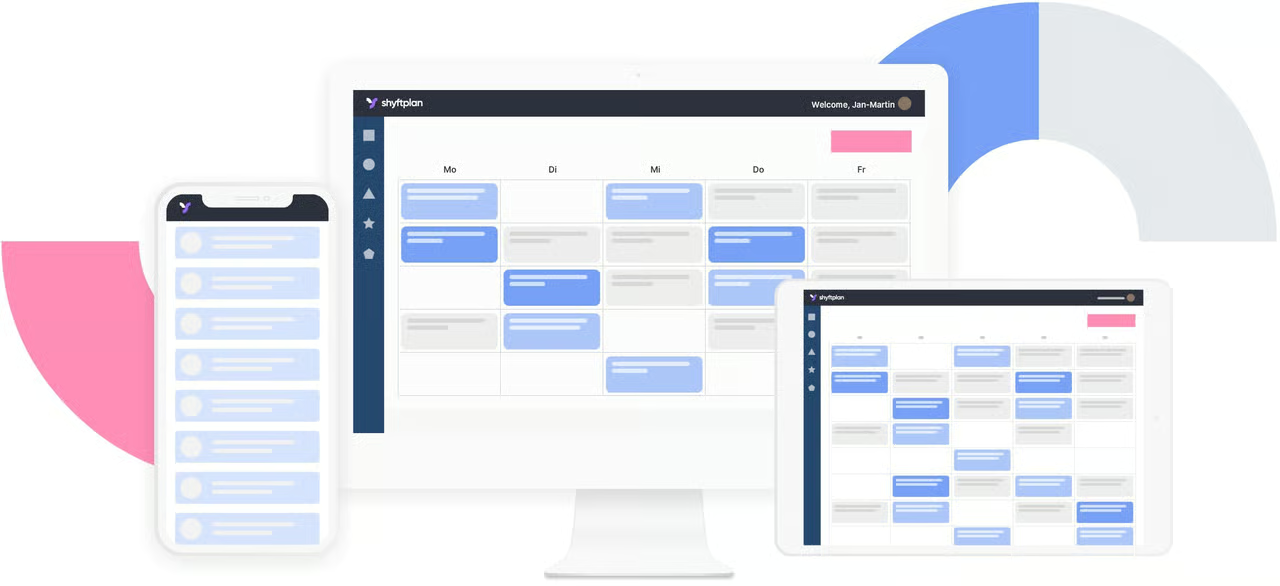
shyftplan digitizes and automates workforce scheduling for complex operational and industrial environments (from 100 employees). The integrated AI generates rule-based, legally compliant schedules. Flexible criteria such as fixed workstations, fair shift distribution, and qualifications (shyftskills) are automatically taken into account. As a certified SAP partner, shyftplan offers standard interfaces to platforms like SAP SuccessFactors and SAP HCM. Via the mobile app, employees can proactively swap or take over shifts.
Strengths: AI-supported automated planning, legally secure compliance checks, deep SAP integration, digital qualification management.
Suitable for: Medium to large industrial companies with complex planning requirements and shift models.
3. SchichtplanerOnline
SchichtplanerOnline was developed to make it easier for small companies to organize their working hours. The web application offers central functions such as schedule creation, an integrated communication system, and efficient absence management.
Strengths: Cost-effective solution, easy online access, integrated communication.
Suitable for: Small service companies looking for an uncomplicated administrative solution.
4. Shiftbase
Shiftbase is software designed to support companies in efficiently planning and managing their deployment times. The application scores points with a clearly structured interface. Main functions include time tracking, absence management, and internal team communication.
Strengths: Solid basic functions, integration into existing systems, mobile app.
Suitable for: Small to medium-sized companies in hospitality, retail, and transport.
5. Planovo
Planovo is a web-based solution for the efficient organization of working hours. It takes workforce availability into account and manages absences. With integrated tools for time tracking, Planovo ensures a smooth planning process.
Strengths: Adaptable to industry-specific needs, transparent shift assignment.
Suitable for: Retail, hospitality, and healthcare.
6. MeinSchichtplan / ShiftJuggler
MeinSchichtplan facilitates the fast creation and publication of schedules. The basic version is free of charge. For advanced requirements (such as time tracking and automatic backups), the paid version ShiftJuggler is available.
Strengths: Automatic schedule distribution, free entry (basic version).
Suitable for: Small companies with very simple models.
7. Planerio
Planerio is specifically tailored to the complex requirements of clinics, nursing homes, and medical practices. The software automatically takes medical qualifications, collective bargaining agreements, and statutory working time regulations into account.
Strengths: Coverage of medical tariffs, seamless integration into hospital systems.
Suitable for: Healthcare facilities (clinics, nursing homes).
8. Kenjo
Kenjo is a comprehensive platform for managing HR processes. It combines workforce scheduling with tools for the central organization of employee data, leave management, payroll, and recruiting.
Strengths: Automation of overall HR tasks, central data management.
Suitable for: Small and medium-sized companies that want to bundle their entire HR administration.
9. Staffomatic
Staffomatic was developed specifically for service companies. The workforce can record availabilities and report absences directly via the software. Additional functions for time tracking round off the package.
Strengths: Fast creation of schedules, easy handling for service providers.
Suitable for: Service companies of various sizes.
10. Smartplan
Smartplan is a flexible platform for organizing working hours. The application can be used across devices, allowing teams to access it via an app. Shift swaps within the workforce are easily possible.
Strengths: Mobile app, uncomplicated communication, direct shift swapping.
Suitable for: Businesses with a need for high communication density.
11. Aplano
Aplano offers cloud-based scheduling with functions for time tracking and leave management. Changes to the schedule are updated in real-time and synchronized to the employees' end devices.
Strengths: Real-time updates, intuitive user interface.
Suitable for: Hospitality, retail, and care services.
12. WorkforcePlus
WorkforcePlus automates scheduling and actively involves employees in time management. The system can be connected to HR and payroll systems to simplify data exchange for payroll accounting.
Strengths: Focus on employee satisfaction, interfaces to payroll.
Suitable for: Medium-sized companies looking for a balanced solution between efficiency and employee involvement.
The Right Workforce Scheduling Software for Your Company
Legally compliant and efficient workforce scheduling is crucial for corporate success. Which of the presented software solutions is the right one depends largely on your company size, the complexity of your processes, and the requirements of your IT infrastructure.While small businesses often get by with simple web tools, industrial companies and corporations absolutely require a high-performance workforce planning tool that automatically checks legal requirements and integrates seamlessly into existing ERP systems (e.g., SAP). Define your requirements precisely to sustainably reduce administrative costs and maximize the productivity of your workforce.
How does IT management ensure secure system integration of the workforce scheduling software?
An isolated standalone solution causes high manual effort and sources of error. A modern workforce planning tool like shyftplan features certified interfaces (APIs) to integrate deeply into existing IT infrastructures (such as SAP SuccessFactors or SAP HCM). This guarantees the IT department a tamper-proof, automated data exchange, prevents data silos, and ensures that working hours and premiums are transmitted to payroll accounting without errors.

How does a workforce planning tool automate compliance with legal requirements?
Manual planning is extremely prone to errors regarding the Working Hours Act. Professional workforce scheduling software solves this through algorithm-based checking mechanisms. Statutory minimum rest periods, maximum working hours, and complex tariff regulations are monitored in the background in real-time. If a compliance violation is imminent when assigning an employee, the system not only issues a warning but can preventively block the faulty planning.
Can short-term personnel absences be compensated legally securely via the software?
Yes, absence management is a core function of high-performance systems. If personnel drop out at short notice, the workforce scheduling software immediately analyzes which employees have the necessary qualifications and sufficient statutory rest periods. The open shift can be posted digitally. The workforce receives the request on their mobile application and can proactively take over the shift. This secures continuous operations and massively relieves the planning managers.