Integrated shift planning for SAP SuccessFactors. Automated and industry-proven.

8 Best Shift Scheduling Software Overview 2026
Our selection of the 8 most efficient software solutions for your shift scheduling in comparison.

For efficiency in shift operations and a satisfied workforce, shift scheduling software is the central hub. But how do you find the software that meets the needs of your business? In this article, we compare the leading shift scheduling software and help you find the right solution for your company.

The use of modern shift scheduling software offers numerous benefits that go far beyond mere time savings. Learn below how it can optimize your workflows.
1. Time Savings and Reduced Error Rate
Automated shift scheduling software simplifies the assignment of shifts and minimizes the number of errors. Additionally, the time required to create shift schedules is significantly reduced with automated solutions.
2. Flexibility for Last-Minute Changes
Last-minute changes, such as sick leaves, can be quickly and efficiently reflected in the shift plan. AI-powered solutions even offer the option to automatically suggest suitable replacements.
3. Automatic Compliance with Legal Regulations
Modern shift scheduling software automatically ensures compliance with labor laws, break regulations, and overtime when creating schedules, preventing violations of legal, company, or collective bargaining agreements.
4. Improved Employee Satisfaction by Considering Shift Preferences
Shift scheduling software makes it easier to consider employees' preferences and wishes in the planning process. It also allows for more flexible vacation planning for both shift planners and workers.
5. Increased Transparency and Better Communication within the Team
With modern shift scheduling solutions, employees always have access to their shift schedules. Communication regarding shift scheduling can be managed directly via an app in some tools, while always remaining GDPR-compliant.
When selecting shift scheduling software, you should consider the following criteria to ensure that the solution meets the specific needs of your business:
1. User-Friendliness
An often underestimated aspect of shift scheduling software is usability. To increase acceptance and efficiency, the software should be easy to use for both planners and employees. An intuitive user interface is crucial.
2. Data Security and Compliance
Shift scheduling software must meet high security standards and comply with all relevant legal requirements, such as GDPR or labor protection laws. It should also be able to adhere to collective and works council agreements.
3. Features and Customizability
Ensure that your shift scheduling software offers sufficient functionalities to meet the company's needs. These may include automatic shift assignments, availability management, and overtime management. The software should also be flexible enough to adapt to the specific requirements of your business.
4. Cost-Effectiveness
The pricing structure should be transparent and economically viable for the company. In addition to licensing costs, you should also consider implementation, maintenance, and training costs.
5. Integration with Other Systems
The software should seamlessly integrate into the company's existing IT landscape to ensure data consistency and efficiency. HR, payroll, and MES systems should be integrable, ideally via standard interfaces to reduce integration effort.
6. Customer Support and Structured Onboarding
Comprehensive customer support is crucial for the successful implementation and use of the software. Additionally, you should agree with your provider in advance on the roles each party will play during implementation.
7. Scalability
Even if you initially seek a shift scheduling solution for a specific area or location, the chosen software should be scalable. If the use of the software is expanded to more employees or other areas in the future, you can build on already implemented structures.
1. Microsoft Excel / Google Sheets
Excel and Google Sheets are widely used spreadsheet programs that are often employed for basic shift scheduling and time tracking. Although they are not specialized shift scheduling software, smaller businesses in particular often use these tools for workforce scheduling.
Excel and Google Sheets offer flexible shift schedule creation through the use of formulas and macros that support task automation as well as the optimization of data management and analysis. Charts and graphs can provide a visual representation of shift distribution, which can be helpful for analyzing work schedules. A notable advantage is their integration with other Microsoft Office or Google Workspace tools, such as Outlook and Teams or Gmail.
Shift scheduling with Excel or Google Sheets is particularly suitable for small teams or individual businesses with low demands for shift scheduling and a need for a cost-effective solution. However, for industrial use, Excel and Google Sheets are insufficient, as they carry a high potential for errors and do not offer integration with personnel management or MES software.
Strengths:
- Reduced onboarding time, as many users are already familiar with Excel
- No additional costs
Suitable for:
- Small businesses with less complex shift operations looking for the most affordable solution.
2. shyftplan
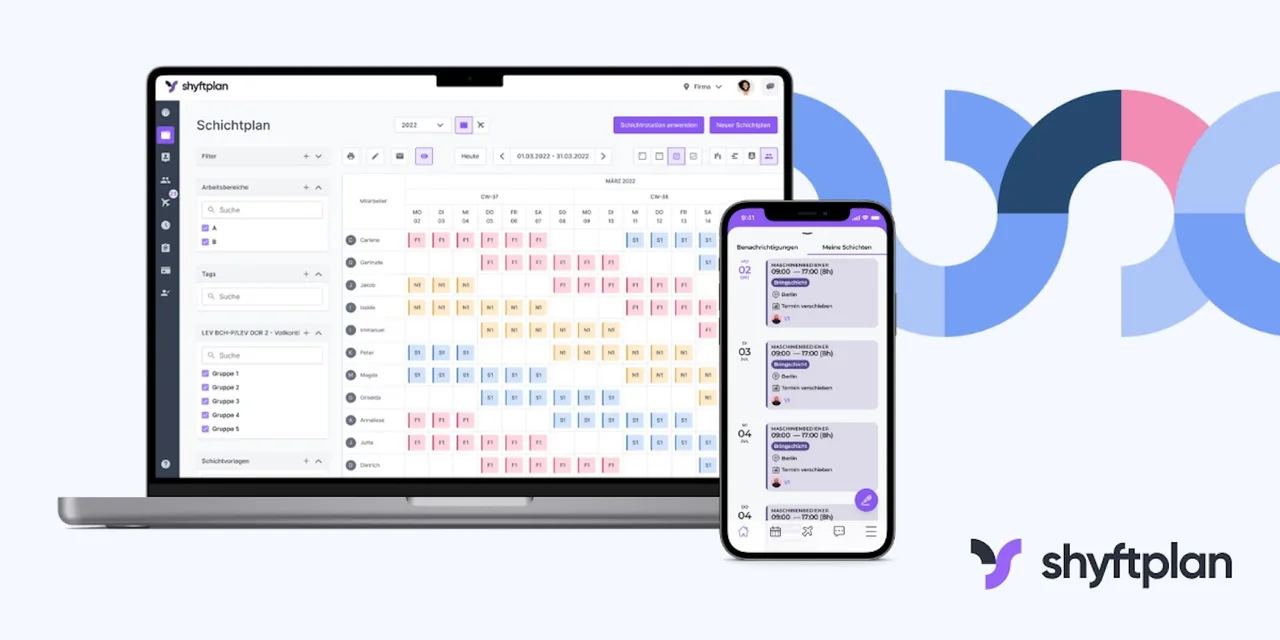
shyftplan offers automated shift scheduling for industrial companies with more than 100 employees. By utilizing AI, shyftplan enables optimal staffing for each shift, even in complex shift systems. Factors such as permanent workstations, fairness, and contractual availability can be freely weighted in the automated shift scheduling process.
Additionally, shyftplan offers integration with ERP and personnel management systems, enabling real-time synchronization of absences and time accounts. In the event of short-term absences or additional staffing needs, shyftplan suggests suitable alternatives based on qualifications and availability. As a certified SAP partner, shyftplan provides standard interfaces to solutions such as SAP SuccessFactors, SAP HANA, SAP HANA Cloud, SAP HCM, and SAP APO.
Employees can easily register absences and sick leaves via the intuitive shyftplan app and communicate with their supervisors in compliance with GDPR. shyftplan also offers unlockable features for self-managed shift exchanges.
Strengths:
- Automated shift scheduling considering qualifications and availability
- Real-time synchronization of employee data
- Integration with all common HCM systems
- AI-based suggestions for replacements
- Employee app
- User-friendly interface
Suitable for:
- shyftplan is particularly well-suited for medium to large companies with extensive manufacturing processes.
3. Planerio
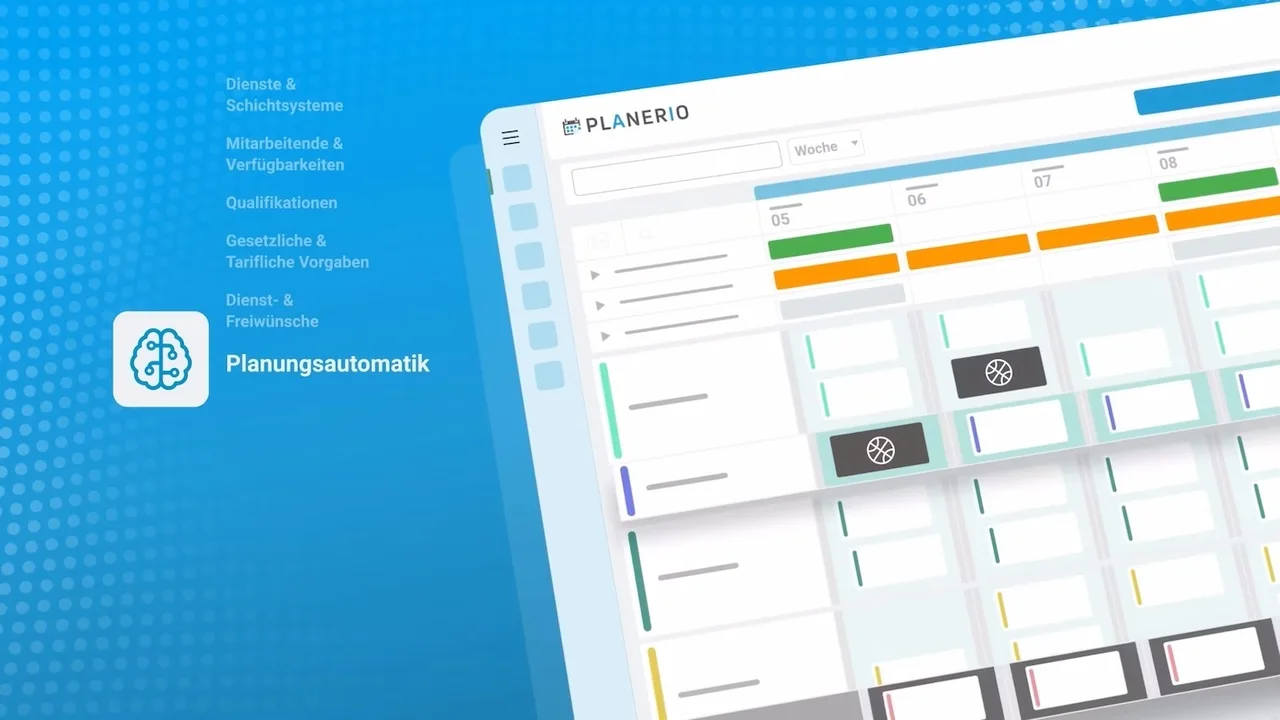
Planerio is a shift scheduling software specifically tailored to meet the needs of the healthcare sector. Planerio offers a solution for frequently changing shift schedules and the required flexibility in hospitals, care facilities, and medical practices.
In addition, Planerio enables intelligent shift scheduling, taking into account employee availability, qualifications, and preferences. It ensures compliance with legal working time regulations as well as collective agreements and internal company policies, which is particularly important in the healthcare sector. Beyond shift scheduling, the software also offers time tracking and absence management features.
The integration of Planerio with existing hospital and care systems simplifies the management and use of patient data in connection with workforce scheduling.
Strengths:
- Specifically developed for the healthcare sector
- User-friendly, despite complex requirements in healthcare
- Suitable for both small practices and large hospitals
- Integrates legal and collective agreement requirements
- Employee app
Suitable for:
- Planerio is particularly suitable for hospitals, care facilities, and medical practices
4. SchichtplanerOnline
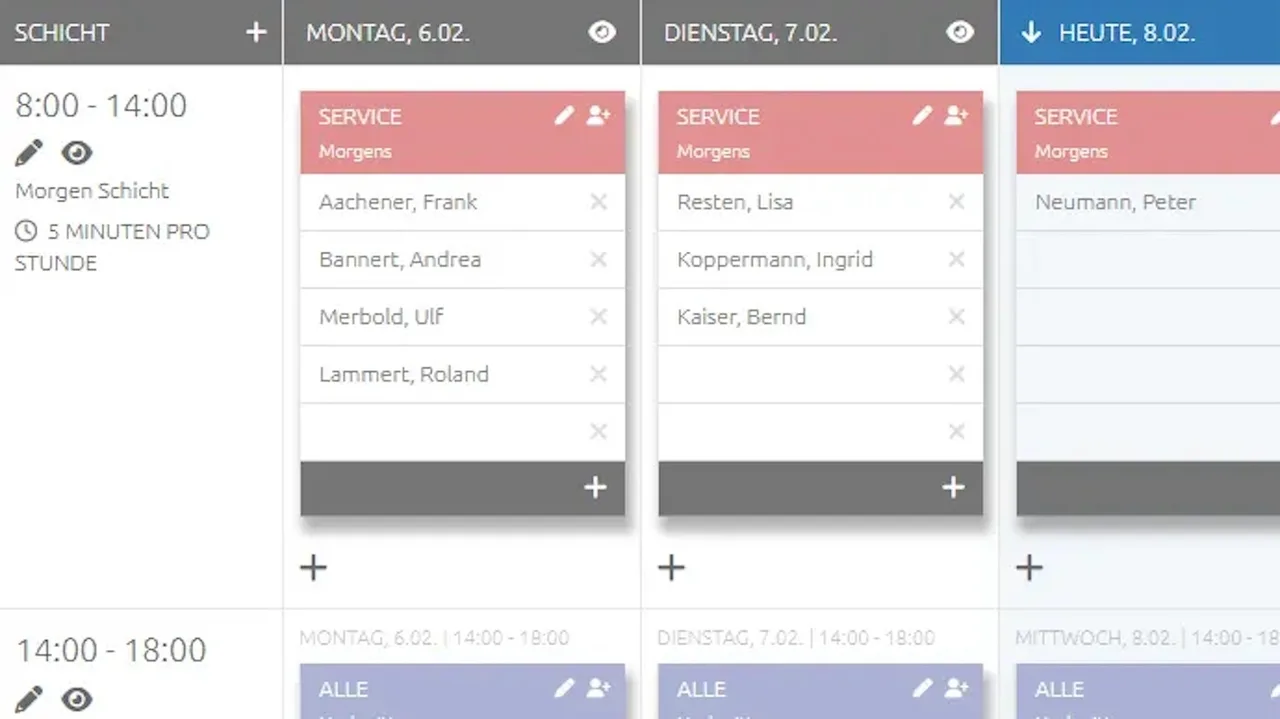
SchichtplanerOnline is a web-based tool specifically designed for shift scheduling in smaller businesses. Its main features include shift scheduling, integrated communication with employees, and absence management. Employees can view their shifts and independently enter and adjust times, reducing administrative workload.
A key feature of SchichtplanerOnline is its focus on user-friendliness and ease of use, allowing businesses to create and modify shift schedules with minimal effort.
Strengths:
- Easy to learn due to its simple and intuitive interface
- Cost-effective
- Available online
- Integrated communication function
Suitable for:
- Since SchichtplanerOnline is web-based, it is ideal for smaller businesses that need a straightforward solution for shift scheduling with manageable functionality.
5. WorkforcePlus
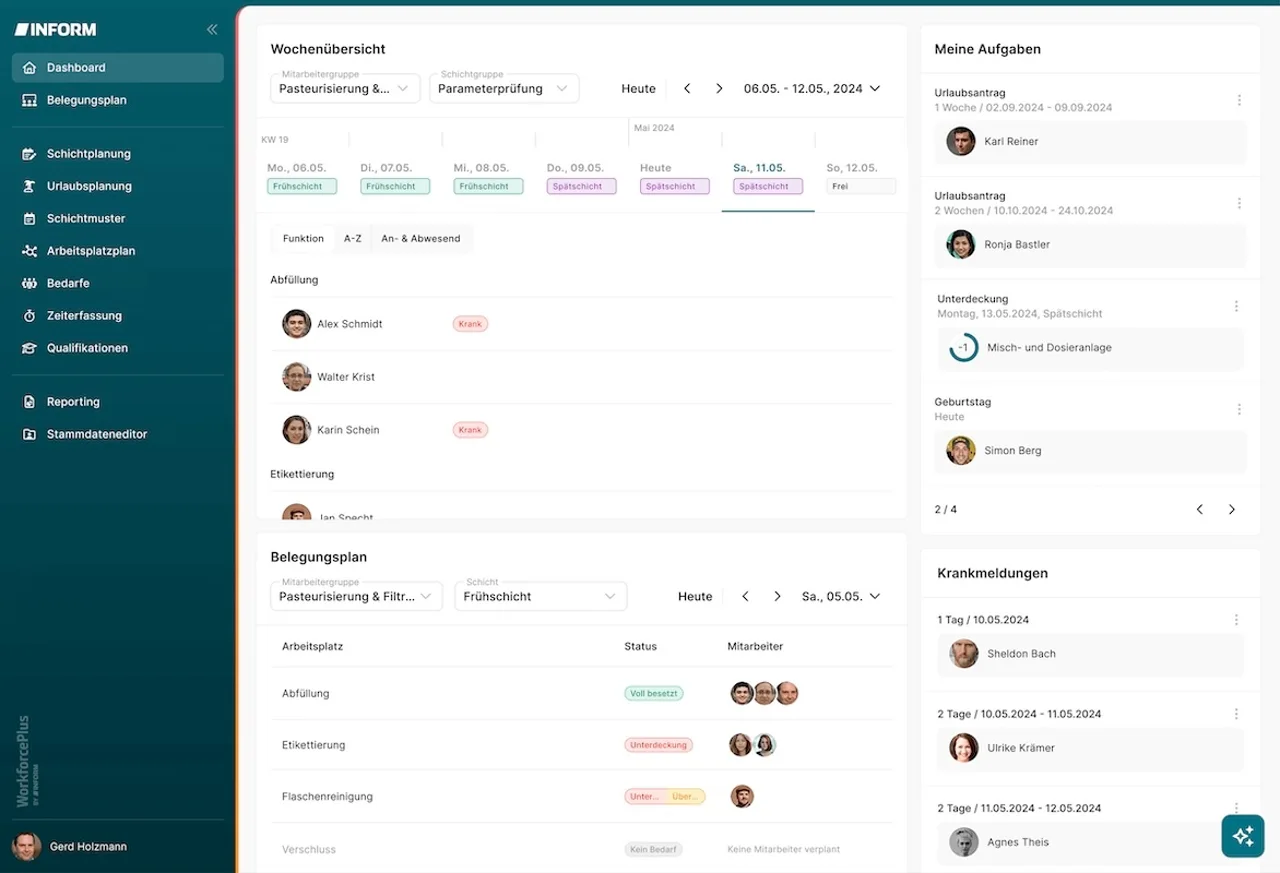
WorkforcePlus is a workforce management and shift scheduling software designed to improve both operational efficiency and employee well-being. The solution enables automated shift scheduling and time tracking, simplifying the management of working hours.
WorkforcePlus offers interfaces to common HR and payroll systems, making data exchange and payroll processing easier. Additionally, WorkforcePlus includes features that allow employees to participate in the planning process.
Strengths:
- User-friendly and intuitive software
- Flexible and adaptable to various industries
- Focus on employee engagement, promoting a positive work environment
- Employee app
Suitable for:
WorkforcePlus is ideal for medium-sized businesses that desire simple shift scheduling while prioritizing employee satisfaction.
6. UKG (Ultimate Kronos Group)
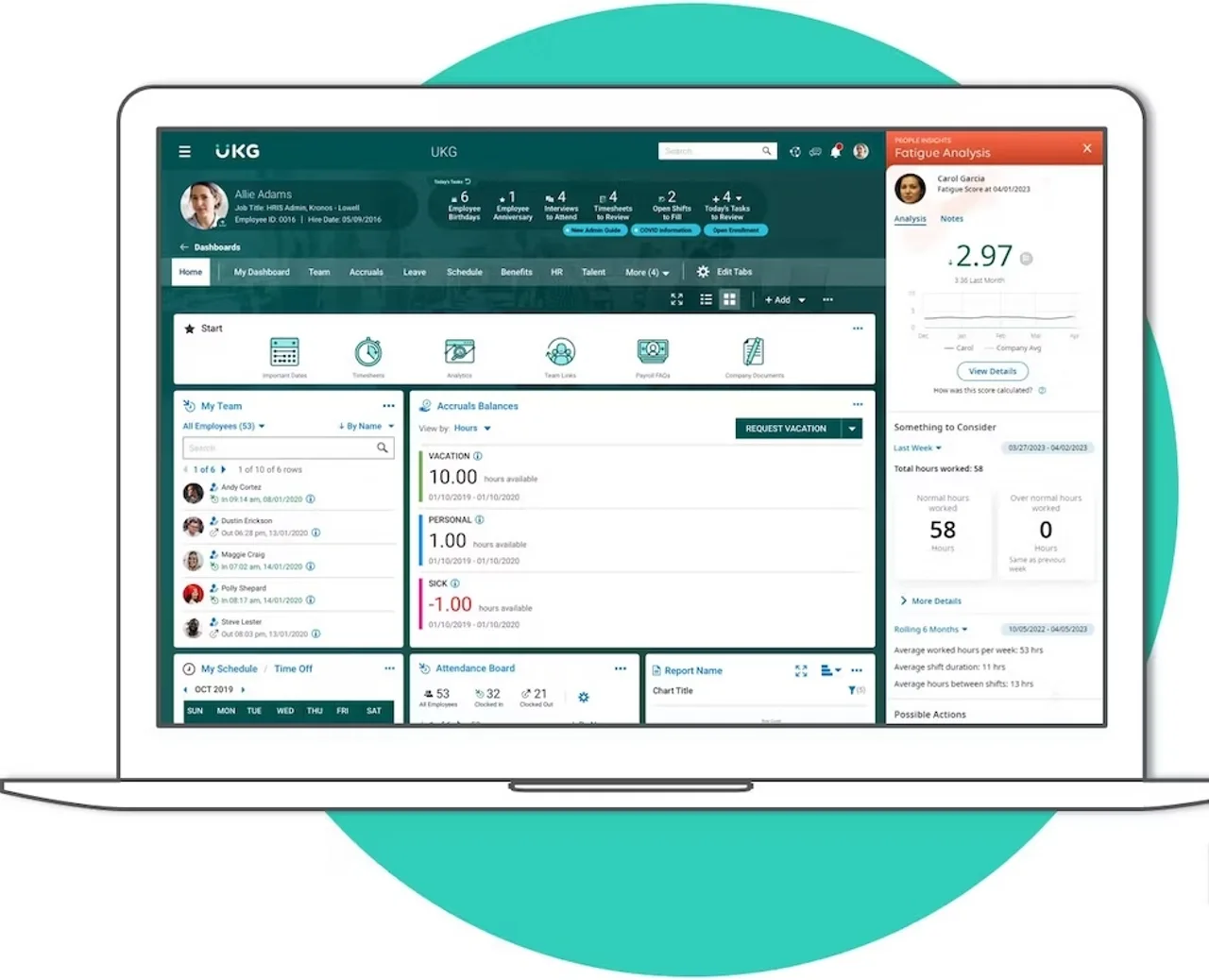
UKG (Ultimate Kronos Group) is a comprehensive HR solution that includes workforce management features such as shift scheduling, time and attendance management, and payroll.
The software enables smooth data exchange with HR, finance, and ERP systems through its extensive integration capabilities. UKG seamlessly integrates payroll functions, supporting complex compensation systems to ensure accurate and timely payments. Additionally, UKG offers tools to enhance employee engagement, including surveys, feedback instruments, and modules for employee recognition and rewards, which help strengthen employee retention.
Strengths:
- Scalable for medium and large companies with specific requirements
- Comprehensive HR software
- Analytics and reporting tools
- Employee app
Suitable for:
- This solution is especially suited for large and multinational companies looking to manage shift scheduling and extended HR processes within a single platform.
7. E2N
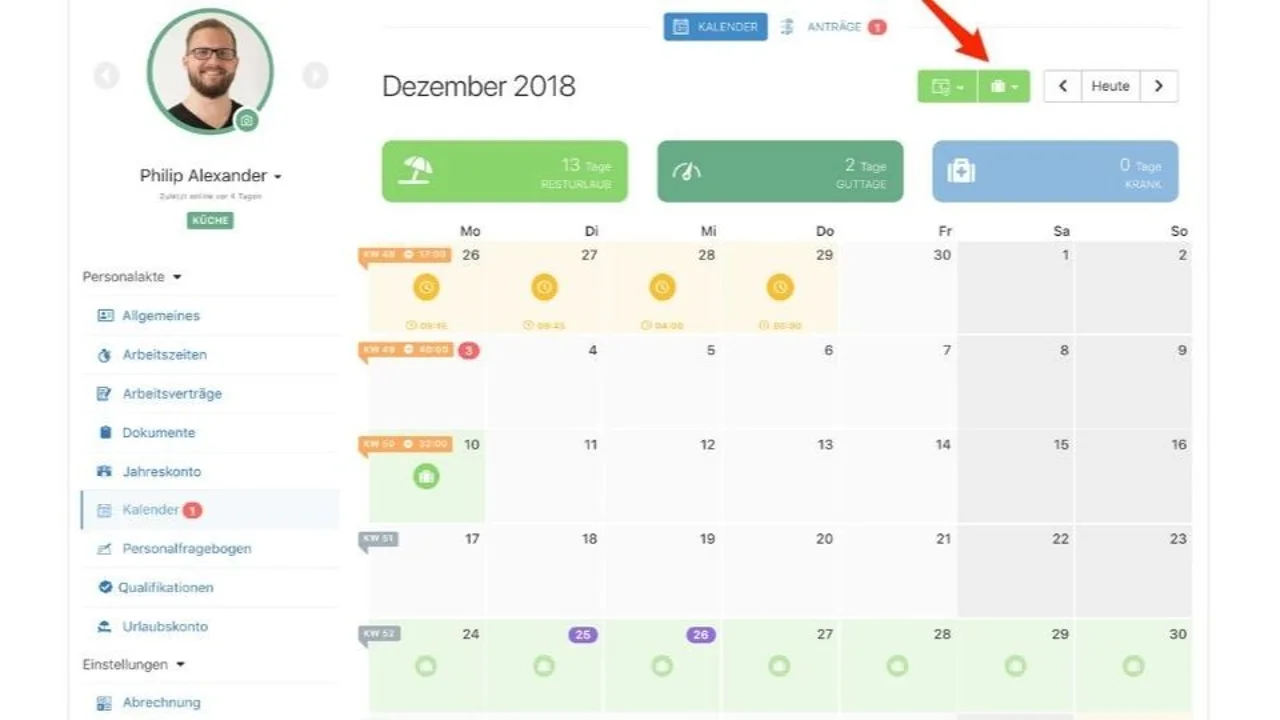
E2N is a specialized software solution tailored exactly to the needs of the gastronomy, hotel, and event industries. The platform combines shift planning with digital time tracking, payroll preparation, and comprehensive personnel management.
The strength of E2N lies in its ability to handle the dynamic and often short-term demands of these sectors. Employees can enter their availability via an app, swap shifts, and access the current schedule at any time. For employers, E2N simplifies compliance with legal requirements such as minimum wage laws, working time documentation, and the correct calculation of supplements. Features like budget planning per shift or real-time analysis of labor costs help managers run their businesses economically.
Strengths:
- Precisely tailored to the gastronomy and event industry
- Integrated, legally compliant time tracking
- Extensive features for labor cost control and budgeting
- Employee app
- Simple payroll preparation with all relevant data
Suitable for:
- E2N is the ideal solution for restaurants, hotels, cafes, bars, clubs, and event agencies that need an industry-specific, all-in-one solution for personnel planning and management.
8. tamigo
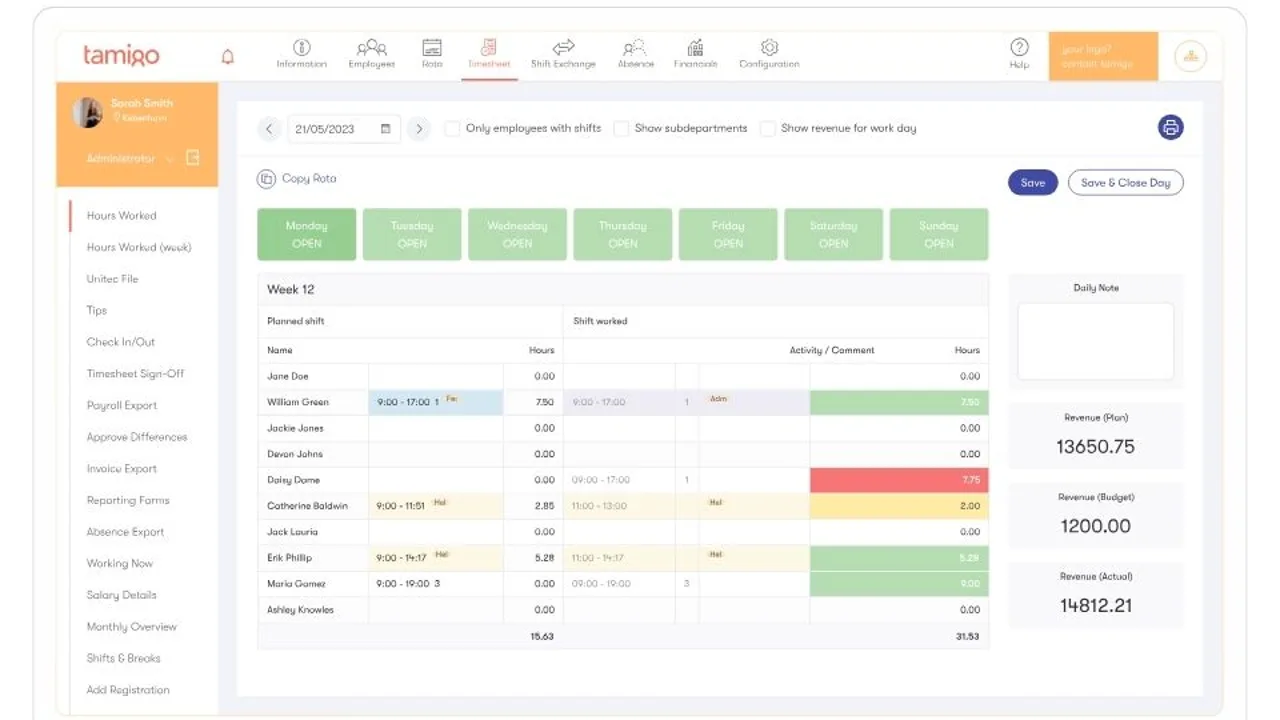
tamigo is a workforce management solution developed specifically for the challenges in the retail and gastronomy sectors. The platform goes beyond simple shift planning, enabling companies to optimize their staff deployment based on data to increase profitability.
A key feature of tamigo is the ability to integrate external data, such as sales figures from the POS system or forecasted customer traffic. Based on this, store managers can plan shifts so that labor costs are always in the optimal range relative to revenue. The software also facilitates the management of multiple locations and offers extensive analysis and reporting functions to keep an eye on important KPIs (e.g., productivity, labor cost percentage). Employees are actively involved via an app, can view their work schedules, and swap shifts.
Strengths:
- Strong specialization in the retail sector
- Integration of POS data for revenue-optimized planning
- Central management and comparison of multiple store locations
- Comprehensive financial and KPI analysis features
- Adherence to industry-specific collective agreements and regulations
Suitable for:
- tamigo is the ideal solution for retail chains that want to precisely control their labor costs and adapt staff deployment to actual business performance based on data.
FAQs
Häufig gestellte Fragen
How much does the mobile app for employees cost?
The mobile app for Android and iOS is included in the licensing fee. This means your employees can benefit from it at no additional cost.

Which businesses is shyftplan suitable for?
shyftplan is designed for companies with a three- to five-digit number of shift employees. If needed, shyftplan can also be used for companies with fewer employees. However, please note the minimum price of € 700 per month.
Will my staff receive training from shyftplan?
All new shyftplan customers receive training for their planners, which is included in the price. We also offer regular customer webinars where new features are introduced and explained. Additionally, you can access relevant information on setting up and using shyftplan anytime through our knowledge base.