Integrated shift planning for SAP SuccessFactors. Automated and industry-proven.

20 Best Shift Scheduling Tools
Strategic criteria and market overview for selecting legally compliant and efficient employee scheduling software for modern companies

Digital employee scheduling is a strategic necessity for modern companies. To react flexibly to fluctuating personnel demands, businesses require reliable software solutions. Professional employee scheduling software ensures productivity, lowers administrative costs, and guarantees compliance with legal requirements. In this market overview, we present established employee scheduling applications and define clear criteria to help you select the optimal digital scheduling solution for your company.
Criteria for Selecting Employee Scheduling Software
Before implementing a specific employee scheduling software, the company's structural scheduling requirements must be precisely analyzed. The following criteria are crucial for the decision-making process of plant, HR, and IT management:
User-Friendliness and Acceptance
An intuitive user interface ensures high acceptance among the workforce and increases the efficiency of scheduling managers. A clear structure without redundant processes shortens the onboarding time and reduces errors during duty assignment.
Data Security and Legal Conformity (Compliance)
A professional scheduling solution must meet the highest IT security standards and strictly map legal requirements such as the Working Hours Act and the General Data Protection Regulation (GDPR) within the system. Violations of rest periods or impermissible overtime must be algorithmically blocked.
Feature Set
The feature set must solve the company's core operational problems. Automated duty assignments, digital availability management, and precise control of working time accounts are essential to reduce administrative costs and increase planning quality.
Operational Flexibility
The software must be adaptable to react flexibly to short-term personnel bottlenecks or seasonal fluctuations. The ability to digitally post open duties ensures continuous operations.
Cost-Effectiveness and Transparency
The pricing structure must be comprehensible for the purchasing department. A transparent Total Cost of Ownership (TCO) includes not only the pure license costs but also the expenses for system integration, maintenance, and training.
Customer Service and Systematic Implementation
A structured implementation process by the software provider is essential. Clear responsibilities and reliable technical support guarantee a smooth integration into ongoing operations.
Scalability and System Integration
The solution must grow with the company. For IT management, integration capability (interfaces to SAP, payroll accounting, and HR systems) is the most critical criterion to avoid data silos.
Overview of the Top 20 Employee Scheduling Applications
Note: The list includes established applications of varying complexity levels, from simple solutions for small businesses to highly complex systems for the industry.
1. Excel / Google Sheets
Manual spreadsheets are frequently used for rudimentary planning. They offer no legal checking mechanisms, are highly error-prone, cause immense administrative effort, and generally constitute a data protection violation.
2. Workday
Workday is a comprehensive cloud solution that combines HR and financial management. The platform offers basic tools for employee scheduling, time tracking, and payroll accounting.
Strengths: Extensive data analytics, high scalability.
Focus: Multinational corporations that want to bundle complex HR and financial processes centrally in one system.
3. shyftplan
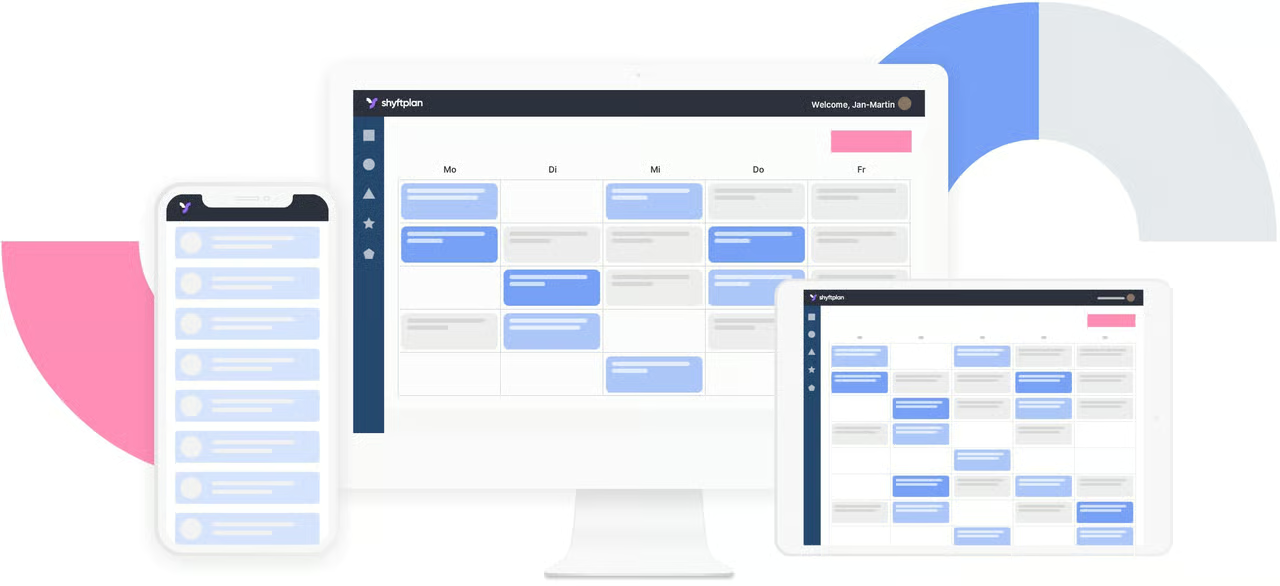
shyftplan digitizes and automates employee scheduling for complex operational and industrial environments. The software generates legally compliant rosters based on algorithms and significantly increases planning efficiency. The integrated qualification management (shyftskills) ensures that critical positions are exclusively filled with certified employees. For IT management, shyftplan, as a certified SAP partner, offers deep integrations into existing systems (such as SAP SuccessFactors, SAP HCM) for error-free payroll accounting. Via the mobile application, employees can also proactively take on open duties and report absences in a GDPR-compliant manner.
Strengths: Fully automated employee scheduling, precise qualification management, deep SAP integration, legally compliant compliance checks, mobile application for the workforce.
Focus: Medium-sized to large companies as well as industrial plants with complex scheduling requirements and strict compliance guidelines.
4. Planday
Planday is a digital HR management solution that focuses on communication. Employees can submit availabilities and request duty swaps.
Strengths: Clear interface, digital absence management.
Focus: Small to medium-sized businesses in the hospitality and retail sectors.
5. Papershift
Papershift is a web-based employee scheduling software for the simple structuring of working hours, time tracking, and leave management.
Strengths: Fast setup, easy to use.
Focus: Companies with standardized duty models without high complexity.
6. Quinyx
Quinyx focuses on optimizing working hours and managing absences while taking internal guidelines into account.
Strengths: Customizable policies, reporting functions.
Focus: Service sector, logistics, and retail.
7. Shiftbase
Despite the name, Shiftbase offers a general employee scheduling solution with solid time tracking and communication options for team members.
Strengths: Easy handling, solid basic functions.
Focus: Small to medium-sized companies in transport and hospitality.
8. Staffomatic
Staffomatic is an online application developed primarily for the service sector. It allows the input of availabilities and requests for duty swaps.
Strengths: Fast creation of duty rosters, easy communication.
Focus: Service providers of various sizes.
9. Planerio
Planerio was specifically designed for the healthcare sector. The software takes into account the specific requirements and collective agreements in clinics, care facilities, and medical practices.
Strengths: Coverage of medical tariff regulations, consideration of medical qualifications.
Focus: Hospitals, nursing homes, medical care centers.
10. WorkforcePlus
WorkforcePlus is an HR management solution that automates employee scheduling and time tracking, actively involving employees in time management.
Strengths: Focus on employee satisfaction, interfaces to payroll accounting.
Focus: Medium-sized companies across various industries.
11. Planovo
Planovo is a web-based planning tool that focuses on integrated absence management and accommodating employee preferences.
Strengths: Transparent duty assignment, easy adaptability.
Focus: Hospitality and retail.
12. UKG (Ultimate Kronos Group)
UKG is a comprehensive HR solution that offers modules for attendance management, payroll accounting, and employee retention (surveys) in addition to employee scheduling.
Strengths: Very broad range of functions, sound analysis options.
Focus: Corporations that require an all-encompassing HR system.
13. Aplano
Aplano offers cloud-based employee scheduling and time tracking in real-time.
Strengths: Fast implementation, real-time synchronization.
Focus: Small businesses in care and retail.
14. MeinSchichtplan / ShiftJuggler
Despite the mention of shift terminology in the brand names, these are software solutions for general employee scheduling. MeinSchichtplan offers basic functions, while ShiftJuggler expands these with time tracking and automatic backups.
Strengths: Cost-effective entry for small businesses.
Focus: Very small companies with low complexity.
15. SchichtplanerOnline
A web-based solution dedicated purely to employee scheduling and absence management for smaller businesses.
Strengths: Low entry costs, reduced administrative effort.
Focus: Small service companies.
16. Smartplan
Smartplan enables the simple organization of working hours and offers functions for direct duty swaps among colleagues.
Strengths: Mobile application, uncomplicated communication.
Focus: Businesses that require a high density of communication.
17. Schichtplaner5
Schichtplaner5 is PC-based software for creating duty rosters and managing working hours.
Strengths: Low license costs, short onboarding time.
Focus: Companies with standardized planning requirements.
18. Sheepblue
Sheepblue uses automated logic for roster creation and integrates a chatbot function for coordination with the workforce.
Strengths: Automated duty swaps, chatbot communication.
Focus: Retail and logistics.
19. Kenjo
Kenjo is an HR software that offers employee scheduling as part of a comprehensive management suite (recruitment, performance review, payroll).
Strengths: Centralization of overall HR management.
Focus: Small to medium-sized enterprises.
20. Crewmeister
Crewmeister specializes in mobile time tracking and basic employee scheduling.
Strengths: Strong mobile time tracking, cost-effective.
Focus: Trades, small care businesses, and hospitality.
Managing Complex Duty Rosters Efficiently and in Compliance with the Law
The manual management of duty rosters or the use of inadequate software solutions carries high risks for compliance violations and inefficient resource utilization.In a personal consultation, we will show you how you can automatically adhere to legal requirements through system-side checks using digital employee scheduling from shyftplan. You will learn how to identify impending personnel bottlenecks early on, schedule your workforce according to their qualifications, and sustainably automate administrative processes through deep system integrations (e.g., SAP).
What must IT management pay special attention to when implementing employee scheduling software?
The most critical criterion for the IT department is system integration. Modern employee scheduling software must not act as an isolated data silo. It must have certified standard interfaces to ensure seamless and tamper-proof data exchange with existing ERP and HR management systems (such as SAP HCM or SuccessFactors). Only in this way is it guaranteed that recorded working hours and duty allowances are transmitted to payroll accounting without errors and that data security is consistently maintained in accordance with the GDPR.

How does digital employee scheduling support HR management in maintaining legal compliance?
Manual employee scheduling via Excel spreadsheets carries an extreme risk of undetected violations of the Working Hours Act (ArbZG). Professional employee scheduling software solves this problem through integrated, rule-based system control. Statutory regulations—such as the eleven-hour minimum rest period, maximum daily working hours, and special collective agreement rules—are checked by the algorithm in the background in real-time. If a compliance violation threatens during duty assignment, the system preventively blocks the process.
How flexibly does automated employee scheduling react to short-term personnel bottlenecks?
In the event of unexpected personnel absences, manually searching for a replacement significantly delays operational processes. Digital employee scheduling software automates absence management: Open vacancies are posted directly via the system as available duties. Qualified employees receive a notification on their mobile application and can proactively take on the duty. The system immediately cross-references the request with the employee's working time account and statutory rest periods, so the duty roster is updated legally compliantly within minutes.

.avif)