Integrated shift planning for SAP SuccessFactors. Automated and industry-proven.

Future of Work: Future-Proof Shift Scheduling for Industry 4.0
How companies can meet the demands of the Future of Work and Industry 4.0 with digital shift scheduling

The world of work is undergoing a profound transformation, significantly shaped by digitalization, demographic changes, and evolving employee expectations. This trend, known as the Future of Work, goes far beyond the mere introduction of new technologies. It describes a fundamental realignment of working methods, organizational structures, and corporate cultures. At its core, it's about how companies can become more agile, retain employees more effectively, and use innovative technologies to become more productive and remain competitive.
Shift-based operations in industry are particularly affected by this development. A shortage of skilled labor, greater demands for flexibility from the workforce, and growing compliance requirements present shift scheduling with unprecedented challenges. This article highlights the specific meaning of the Future of Work for industrial manufacturing and how the use of digital shift scheduling helps companies meet these demands, act flexibly, and remain future-proof in the long term.
What is changing with the Future of Work?
The Future of Work is creating a new framework for companies. In the industrial sector, this directly influences the planning and control of shift work
- Growing Demands for Flexibility: Employees expect a greater say in their schedules, for example, by having their shift preferences considered to achieve a better work-life balance.
- Shortage of Skilled Labor: The availability of qualified workers is declining. Companies must create more attractive working conditions to attract and retain staff.
- Hybrid and Distributed Teams: Hybrid teams are increasingly emerging in industry, for example, between central production and decentralized maintenance or external service providers.
- Complex Shift Models: Models such as 3-, 4-, or 5-shift systems are gaining relevance and demand due to the Future of Work. This increases the need for tools that can manage this complexity flexibly and economically, as well as enable rapid adjustments to dynamic requirements.
- Increased Demands for Transparency: Employees demand transparent decisions, clear communication, and insight into their schedules.
These changes require a new way of thinking in shift scheduling and the use of modern tools specifically tailored to these new requirements, which consider both company goals and employee needs.
Challenges for shift scheduling in Industry
Shift scheduling in industry faces complex challenges. Inefficient planning can have far-reaching consequences for productivity, costs, and employee satisfaction.
An increasing planning effort arises from the need to align individual preferences, legal regulations, and operational necessities more precisely. This leads to significant problems with the vulnerability to errors of manual systems like Excel spreadsheets or paper-based rosters, which quickly reach their limits with high complexity. Added to this are communication gaps, as coordinating short-term changes or shift swaps is difficult, especially with distributed teams. Skill requirements pose another hurdle: a lack of coordination between employee qualifications and machine assignments creates risks for safety and quality. All these factors result in economic consequences, as inadequate planning directly leads to production downtimes, quality defects, and inefficient resource utilization.
Digital shift scheduling for Flexibility and Efficiency
Digital systems can help industrial companies implement the requirements of the Future of Work in shift scheduling by providing a range of relevant functions.
Flexible shift design is made possible by digital systems that allow personnel to submit their availability and preferred shifts digitally. Planners can take these preferences into account during creation. Shift swaps within the team can be initiated digitally and processed in a rule-compliant manner after approval. The result for employees is an improved work-life balance and more say, while planners benefit from significantly reduced coordination effort and smoother processes.
Effective skill management is ensured by software like shyftskills, which allows for the storage and management of employee qualifications. During shift scheduling, the tool checks whether the assigned employees possess the necessary competencies for the respective task or machine. This helps reduce mismatched assignments and ensures that the most qualified personnel are always deployed in the right place, which increases safety and secures productivity.
AI-supported planning suggestions are another advantage: algorithms can create optimized draft shift schedules based on historical data, current needs, and stored rules. Such systems consider aspects like workload, employee preferences, and legal requirements. Planners thus receive an optimal draft in the shortest possible time, which minimizes the effort for manual planning and simultaneously ensures that all requirements are met.
Legal compliance is ensured by digital planning tools where relevant labor laws and collective agreements are stored. The system warns planners of potential violations of rest periods, maximum working times, or other compliance regulations and documents planning and working hours in an audit-proof manner. This protects the company from costly legal violations and audit worries, while planners can be confident that they are always creating legally compliant schedules.
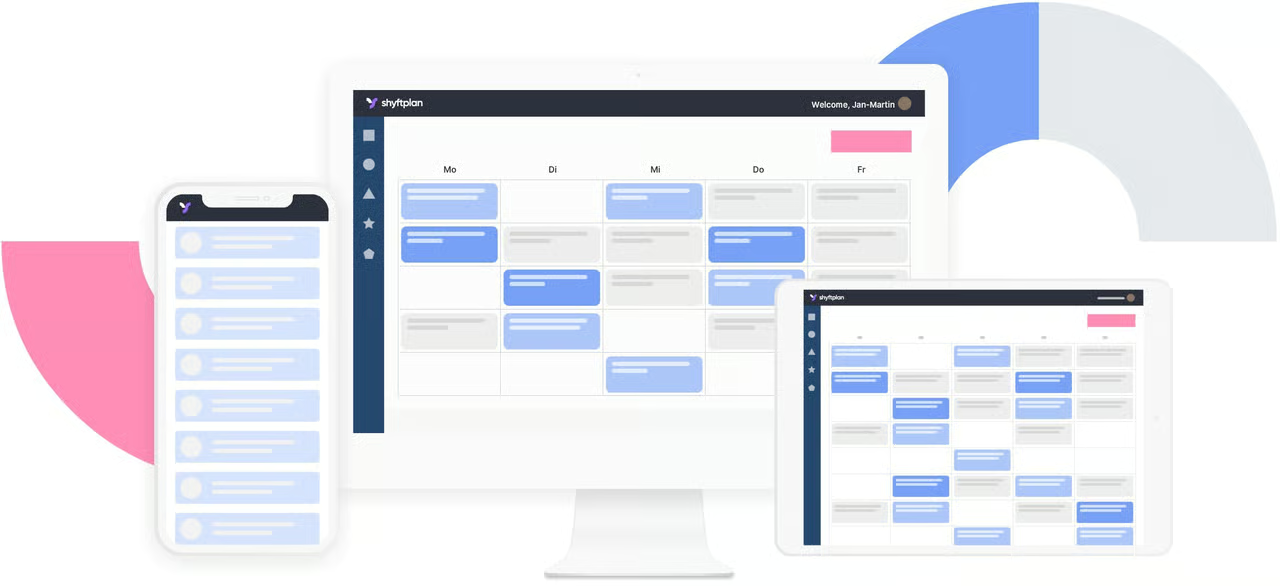
Employee communication and engagement also improve significantly: via mobile apps, employees can access shift schedules, are informed about changes, and can directly use functions such as vacation requests or signing up for open shifts. This transparency and the simple self-service options make employees feel more involved and valued, which strengthens their satisfaction and loyalty to the company.
Providing a basis for data-driven decision-making is a key benefit. Shift scheduling software delivers precise reports and in-depth analyses on essential metrics like personnel costs, overtime, or shift coverage rates. This solid data enables managers to make informed decisions to maximize the efficiency of workforce deployment, thereby directly saving costs and increasing productivity.
Finally, seamless system integration plays a crucial role in the context of Industry 4.0. Digital shift scheduling offers interfaces to ERP, payroll, HR systems, and time tracking terminals to enable data exchange and reduce duplicate data entry. This saves IT costs and reduces errors by allowing data to flow automatically between systems, ensuring that all stakeholders can work with a consistent and up-to-date database.
shyftplan as a solution for the digital shift scheduling of the future
Digital shift scheduling solutions like shyftplan are much more than mere planning tools today – they create tangible benefits and meet the most important requirements of manufacturing companies.
shyftplan enables productivity increases and efficiency by reducing planning effort and minimizing errors through process automation. This leads to improved machine utilization and optimized personnel deployment, which allows for direct cost savings and a positive return on investment (ROI). Planning optimization and process automation reach a new dimension, as shyftplan allows for more targeted and flexible deployment planning. Automated workflows minimize manual steps and significantly increase the quality of planning in HR and production planning. Furthermore, shyftplan contributes to employee satisfaction and flexibility by promoting the consideration of individual wishes and greater team involvement in planning. These are decisive aspects in the competition for skilled workers. Compliance is also comprehensively supported by shyftplan: the system ensures adherence to relevant labor laws and collective agreement provisions, proactively warns of potential violations, and guarantees audit-proof documentation of planned and actual working hours.
shyftplan is a software solution that combines these aspects. It is geared towards the requirements of industrial shift operations, with a focus on efficiency, transparency, employee orientation, and support for legal compliance. The software offers the functionalities described above and supports companies on their journey into the Future of Work.
Tenowo: More Transparency through Digital Skills Management with shyftskills
The Tenowo case study shows how a modern company masters the challenges of the skills shortage and the need for agile skills management – central aspects of the Future of Work – with a digital solution like shyftskills.
Tenowo uses shyftskills for intelligent, digital skills management. This is how Tenowo manages to streamline processes, reduce risks, and develop personnel in a targeted manner. shyftskills creates clarity, audit-readiness, and strategic added value in shift scheduling – as an alternative to paper, Excel, and planning chaos.
Learn how Tenowo centrally manages qualifications, improves planning quality, and lays the foundation for future-proof personnel development with shyftskills.
What is understood by global digitisation?
Global digitisation is the worldwide networking of society, the economy, and culture through modern information and communication technologies. This ongoing process transforms traditional areas of life into digital formats, enabling real-time, cross-border data exchange.

What are the biggest hurdles to digitisation in Germany?
The primary hurdles to digitisation in Germany lie in complex bureaucracy and slow public administration. Legal uncertainties surrounding data protection, the ongoing shortage of skilled workers, and a lack of uniform standards and interfaces further hinder companies from implementing innovative projects.
How does digital transformation differ from digitisation?
Digitisation is the purely technical conversion of analog information into digital formats for more efficient processing. Digital transformation, on the other hand, describes a comprehensive cultural and strategic shift across an entire organisation, completely driven by modern technologies.