Integrated shift planning for SAP SuccessFactors. Automated and industry-proven.

Year in Review 2025
All Highlights and Product Innovations
In 2025, our focus was on further reducing complexity in shift scheduling. Reliable processes are crucial, especially in the manufacturing industry, where dynamic shift models and high qualification requirements are part of everyday life. We have therefore specifically further developed the shyftplan platform to reduce manual effort and increase operational security.
From more precise rights management to the introduction of shyftskills for audit-proof qualification management: We are linking planning and control ever more closely into an integrated whole. Below, we summarize the year's most important new features.

Table of Contents
Highlights of 2025: A Year in Numbers
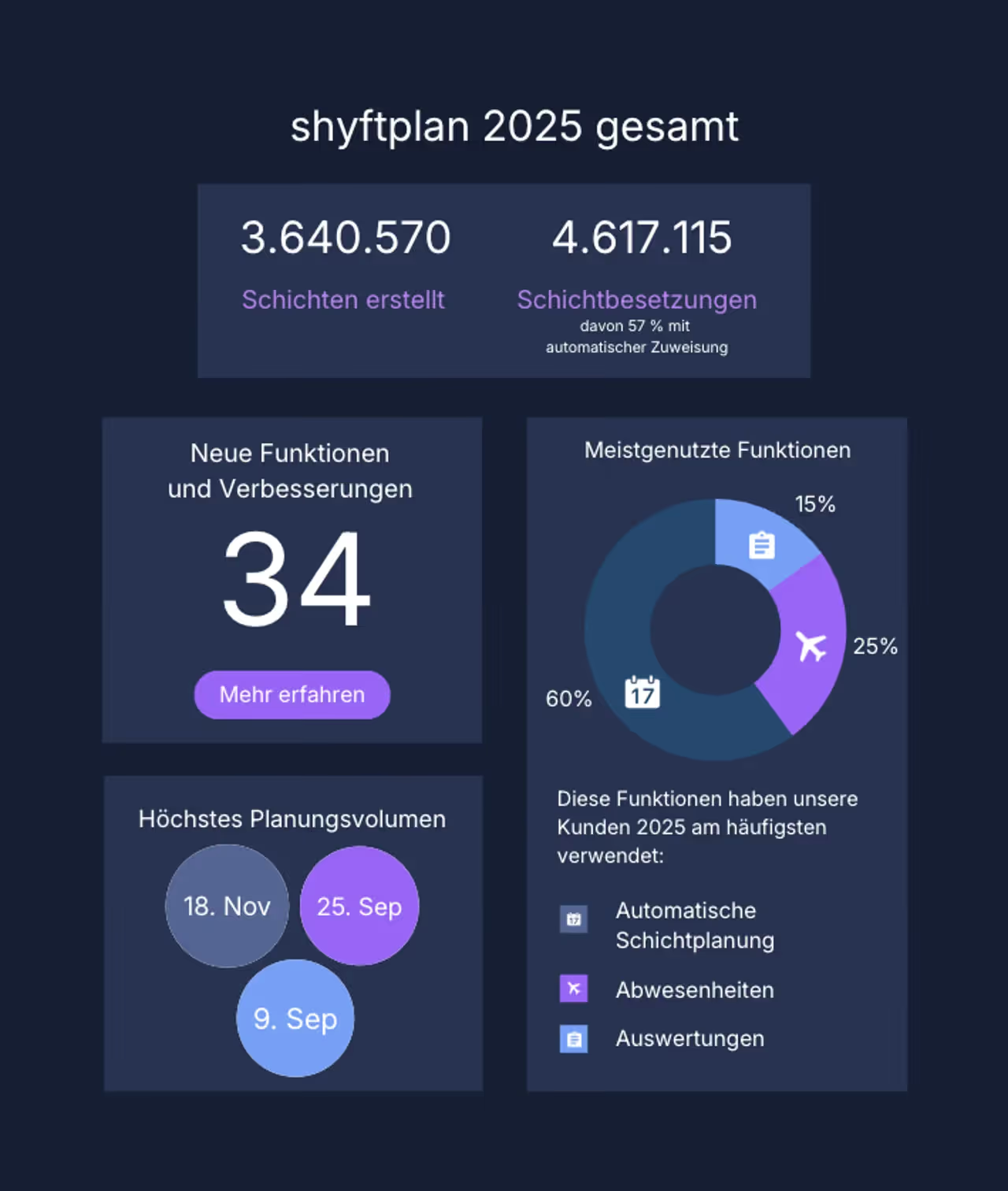
The year 2025 was characterized by intensive use and continuous further development of our platform. We have summarized the most important key figures for you here:
Top 5 Product Innovations at a Glance
Among the numerous functions and updates we released in 2025, these five stand out in particular:
1. Product Launch: shyftskills
With shyftskills, we have integrated a solution that directly links shift scheduling with qualification management. This is particularly important for certification-relevant areas (such as ISO 9001 or IATF 16949). The system compares shift requirements with employee aptitudes in real time and provides proactive warnings regarding expiring certificates. This ensures not only that qualified personnel are always at the machine but also guarantees gapless documentation for compliance audits.
2. Updates for the Shift Plan
To reduce the daily need for coordination, we have refined the automation of shift assignment. You can now define the order in which employees are suggested based on attributes or workspace tags. A practical use case for production: The system can be configured so that external staff are only scheduled once the internal workforce is fully utilized. This ensures cost efficiency and fairness.
3. shyftconnect live and Personio v2 Interface
For an integrated system landscape, the smooth flow of data between HR software (e.g., SAP, Personio) and the shift schedule is crucial. With the expansion to shyftconnect live, report data is now transferred to leading systems on an event-driven basis and without delay. Intelligent event processing bundles incidents, reduces data volume, and ensures data integrity through automatic retry attempts. System disconnects are thus minimized.
4. Rights Management
In complex organizations, clear control is essential. We have combined the management of rights for managers and assignments to workspaces onto a central interface. Permissions can be efficiently checked and adjusted there. In addition, a new column in the employee overview provides immediate clarity on which system role (Employee, Manager, System Administrator) is assigned to a person. This creates security when granting access.
5. Consistent Filters
We have unified the logic of the display options. shyftplan now automatically saves user-related filters (e.g., by location, team, or qualification) as well as view settings. The system restores exactly the state you last used the next time you log in. This applies across pages to all list and planning views. The result is an uninterrupted workflow without unnecessary clicks.
The Next Step in Shift Scheduling
The year 2025 has shown how modern industrial companies can act more efficiently through automation and real-time data. With features like improved rights management and the launch of shyftskills, shyftplan offers a future-proof solution for fair and transparent planning. We look forward to continuing this development with you in 2026.
Do you need to consider data protection when creating a work schedule?
Since personal data is required for a work schedule, data protection naturally applies here as well. A shift schedule should not simply be posted for everyone to see, and it should certainly not be photographed and shared, for example, via messenger—something that often happens in smaller businesses. However, in larger businesses, there can also be problematic interactions between work schedules and data protection. For example, if there is an Excel document that all employees can access and thus view the personal data of others, data protection is violated. Therefore, a shift schedule is a document containing confidential personal data and should be treated as such.

Who is allowed to view the shift schedule?
Regarding data protection, the law is clear on work schedules: not every employee is entitled to view the entire shift schedule. Similarly, every employee has the right to prevent the publication of the schedule—even within the company.
Can shyftplan be integrated with my existing systems?
Yes, with shyftconnect, you can connect not only nearly all SAP systems but also other common HR and planning tools with shyftplan.